What to take away
- 01Cost per stump, not purchase price, is the number that decides whether the attachment pays.
- 02Nothing is carted away: the stump is destroyed in place and what is left is chip, which is why it wins on urban and near-asset sites.
- 03It needs a hammer line plus case drain. Running the piston motor without drainage kills the seals.
An excavator-mounted stump grinder attacks that number from three directions at once. It removes the stump in place so there is nothing to cart. It uses a carrier you already own instead of a dedicated machine. And it works down through the root plate rather than skimming the crown.
How this differs from a traditional stump grinder
The machine most people picture is a wheeled, self-powered grinder with a cutting disc that sweeps side to side across the top of a stump. It works. It also owns a truck space, needs its own transport, and has limited depth.
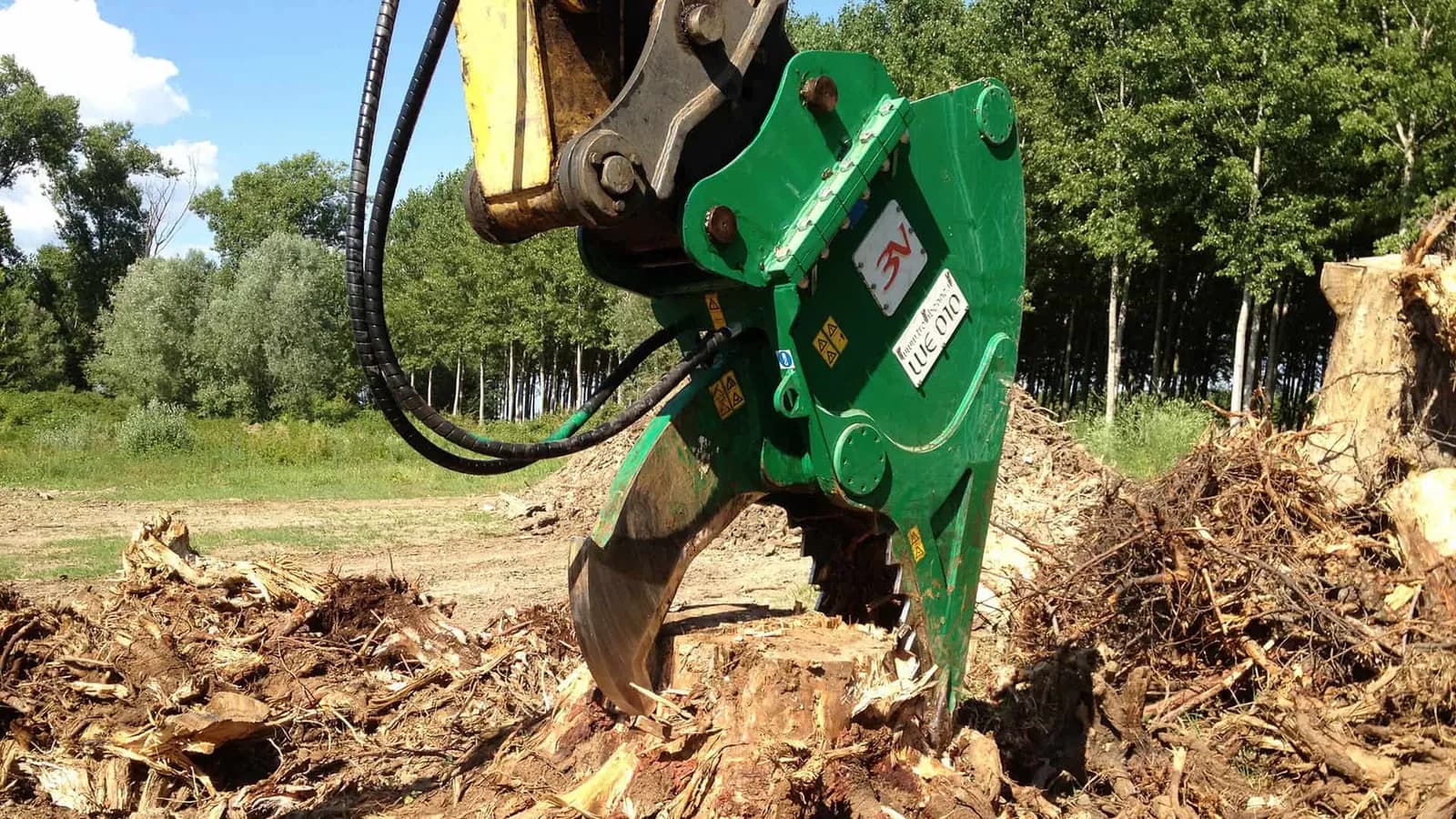
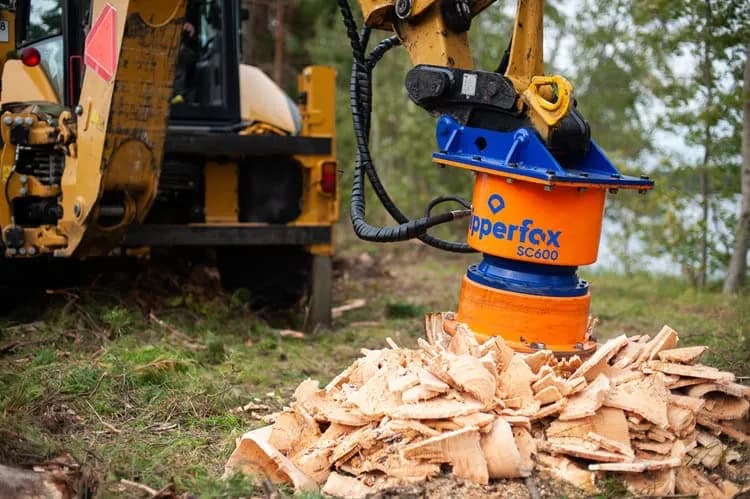
An excavator-mounted grinder mounts on the dipper arm and drives down into the stump and the root system. The mechanism supplied by Machinery Specialist is the Dipperfox SC, which uses rotating blades to carve the stump into shavings rather than skimming it with a disc. Those shavings are biodegradable and can be left on site or removed, which is a meaningful difference when your scope says "no spoil to be removed".
It also means your excavator does two jobs on the same float. For contractors who are already bringing an excavator to site for other reasons, that is the argument.
The range
| Model | Carrier range | Notes |
|---|---|---|
| Dipperfox 400 | 2 to 6 t mini excavators | Urban, tight access, residential |
| Dipperfox 600 | 6 to 14 t | General contracting, mixed work |
| Dipperfox 850 Pro | 14 to 30 t | Volume clearing, forestry operations |
Across the range: unit weight 195 kg to 574 kg, cutting diameter 400 mm to 850 mm, and a published output of 44 to 180 stumps per hour. The supplier also states compatibility from 1.5 tonnes at the bottom of the range, so confirm the exact carrier minimum for the specific model you are quoting.
A patented gear control system automatically adjusts speed and torque according to the resistance it meets in the stump, soil or roots.
Specifications are supplier-published and subject to change. Confirm against the current sheet.
Reading the productivity claim honestly
"44 to 180 stumps per hour" is a wide range, and wide ranges deserve scrutiny.
The top of that range is achievable on small, uniform, soft-species stumps in clean soil with a skilled operator and no repositioning. The bottom of it is closer to large, hard, rocky-ground work. Neither number is dishonest. Both are conditional.
Your job is to work out where your sites sit. Do this before you buy:
- Count stumps on a typical job.
- Measure their diameter distribution, not their average.
- Note the soil. Sandy, clay, rocky, or full of buried rubble.
- Note how far apart they are, because repositioning time is real time.
Then ask the supplier for footage or a demonstration in conditions that look like yours. A reputable distributor will arrange it. If they will not, that tells you something.
Cost per stump: the calculation to run
This is the calculation that should decide the purchase, and almost nobody runs it.
Cost per stump = (hourly carrier cost + hourly attachment cost + operator) / stumps per hour
Where:
- Hourly carrier cost is fuel, maintenance and depreciation on the excavator, per hour
- Hourly attachment cost is purchase price spread over expected life hours, plus wear parts per hour
- Stumps per hour is your realistic figure from the assessment above, not the brochure figure
Then compare that against what you currently pay to subcontract stump removal, or what you currently charge per stump. If the gap is meaningful at your real volume, buy. If the gap only appears at brochure productivity, do not.
Where the money goes in running cost
Cutting teeth and blades. The consumable. Rate of wear is driven almost entirely by soil, not by wood. Sandy and rocky ground eat teeth. Clean clay is gentle. If you work in decomposed granite or fill full of builder's rubble, price teeth accordingly and do not be surprised.
Hidden metal. Old fence wire, star pickets, reinforcing bar and concrete in the root plate. This is the single most common cause of unplanned repair in stump grinding. Probe where you can. Accept losses where you cannot.
Hydraulic supply. Grinding is continuous load, not intermittent. It is harder on a carrier's hydraulic system than digging. On smaller machines especially, check oil temperature under sustained load in your conditions.
Fewer moving parts is a real advantage. The Dipperfox design uses fewer moving parts than many competitors, and the adjustable transmission allows maximum power at low rotation speed. Fewer parts means fewer failure points, which matters more than headline speed once the machine is two years old.
Grinder or cutter? Decide with one question
Does the stump need to leave the site?
- No, it just has to be gone from the ground. Stump grinder. The shavings stay, biodegrade and enrich the soil.
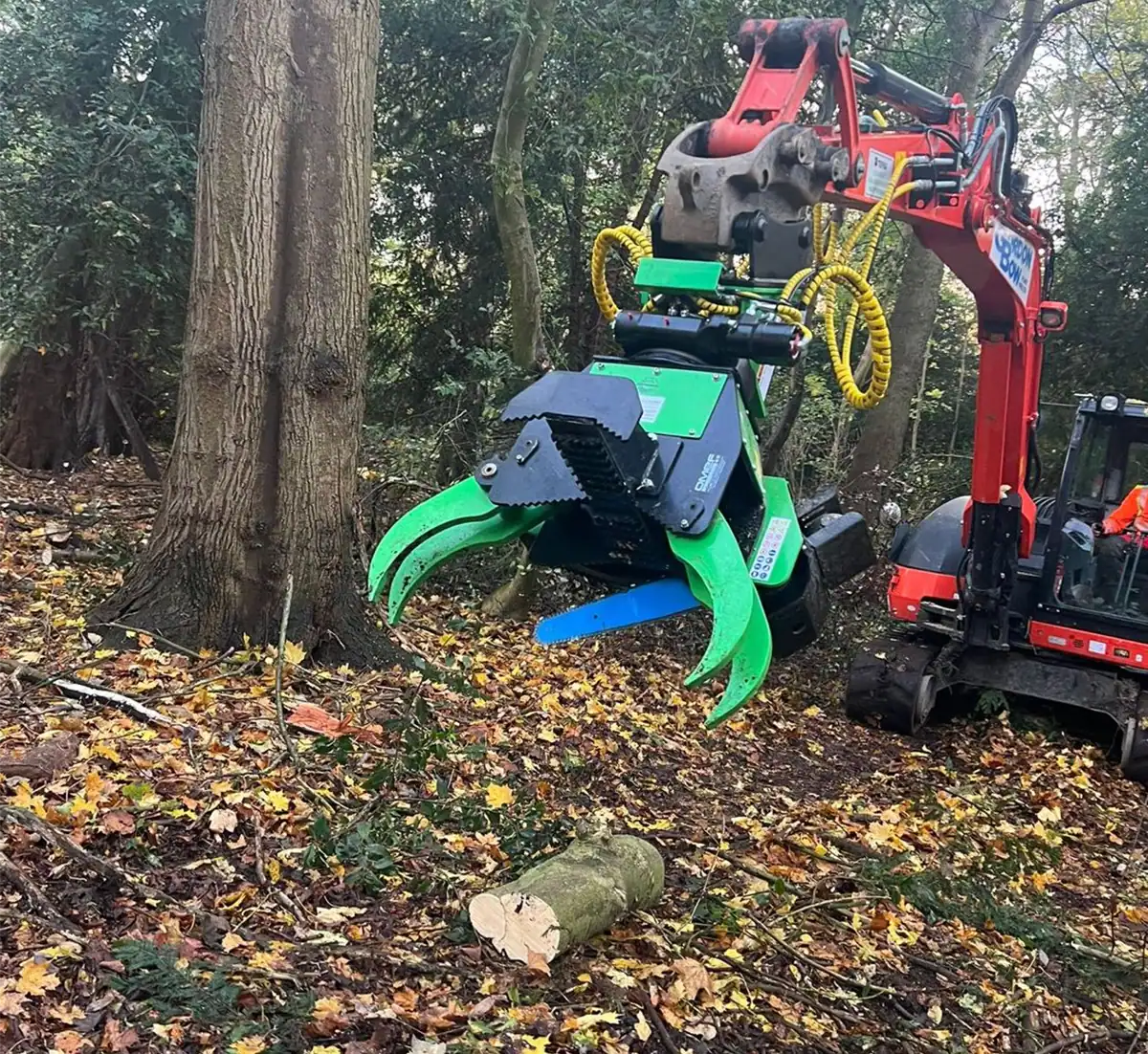
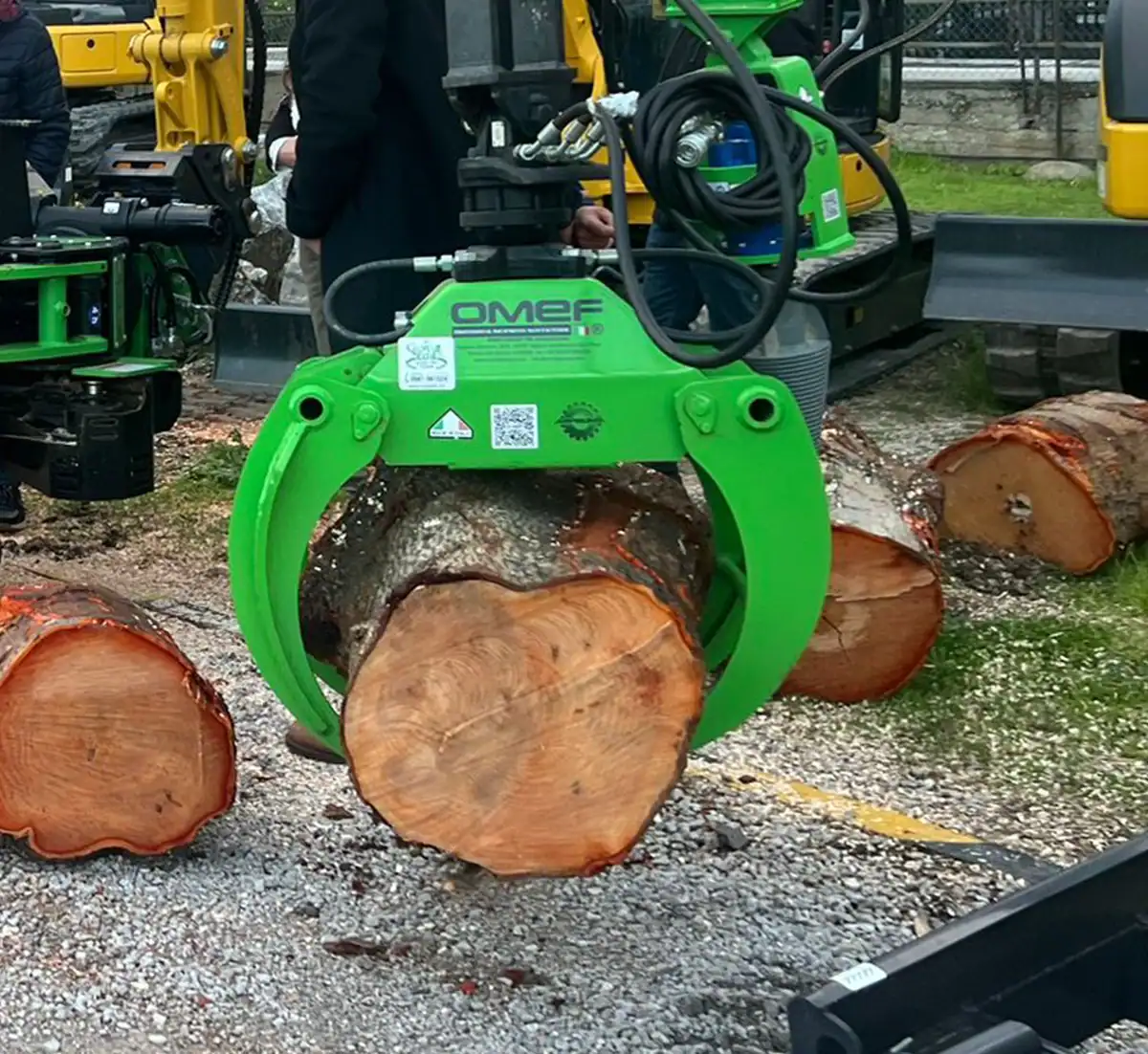
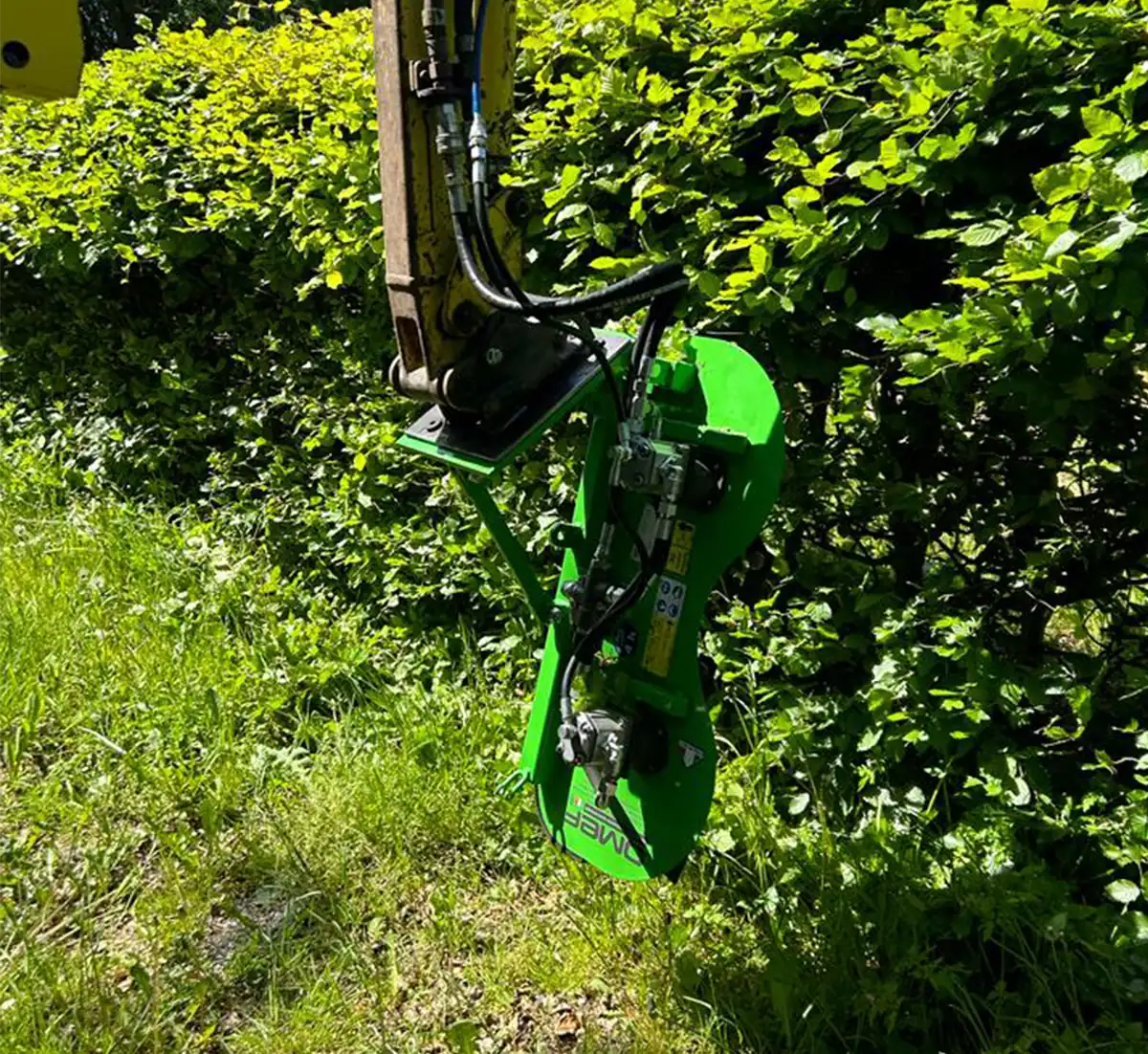
- Yes, and the volume is the problem. You need extraction plus a stump cutter to size the material for transport and processing.
Buyers who own both usually bought the grinder first.
The honest limitations
- Productivity claims assume good conditions. Assume the middle of the published range, not the top.
- Buried metal is an uninsurable nuisance. It will happen. Budget for it.
- It competes with your excavator's availability. If your machine is fully committed, the attachment does not create capacity, it creates a scheduling conflict.
- Shavings are not always welcome. Some clients and some specifications require the hole cleaned and backfilled with imported material. Check the scope before you promise "no spoil".
- Depth is finite. Grinding removes the stump and major roots. It is not a substitute for full excavation where a structure is going on top.
Buy, hire or subcontract
| Annual stump volume | Route |
|---|---|
| Under a few hundred | Subcontract. The maths will not close. |
| Several hundred to a few thousand | Buy the model matching your existing carrier |
| High volume, continuous | Buy, and negotiate tooth supply and pricing in the same deal |
Compliance notes
Grinding throws material. Exclusion zones, guarding and eye protection are basic requirements, and operator protective structures under ISO 8084 are the relevant reference for cab protection. Quick hitches carrying the attachment must meet AS 4772-20081 or an equivalent such as ISO 13031-2016, including a secondary retention system. Underground services are the other live risk: stump grinding goes below ground level, so Before You Dig enquiries and service location are part of the job, not an optional extra.
Questions to ask before you sign
- Which model matches my exact carrier, and what is the confirmed minimum operating weight?
- What is realistic output in my soil type and stump size, with footage to back it?
- What do replacement teeth cost, and what is Australian stock and lead time?
- What is the flow and pressure requirement, and does my auxiliary circuit meet it under sustained load?
- What happens to the warranty when I hit buried metal?
- Does the price include the mounting bracket and hose kit for my machine?
Grinding and cutting are opposite jobs
The most common category error in this market, drawn rather than described.
Frequently asked questions
01How does an excavator stump grinder work?
It mounts on the dipper arm and uses rotating blades to carve the stump and root system into biodegradable shavings. A gear control system automatically adjusts speed and torque depending on the resistance of the stump, soil or roots.
02What size excavator do I need?
The Dipperfox range covers excavators from about 2 to 30 tonnes across three models: the 400 for 2 to 6 tonne machines, the 600 for 6 to 14 tonne machines and the 850 Pro for 14 to 30 tonne machines. Confirm the exact minimum for your chosen model.
03How many stumps per hour can it do?
Published output is 44 to 180 stumps per hour. Treat that as a range across conditions rather than a single expected figure, and assess your own sites for stump size, species, soil and spacing before relying on it.
04What happens to the shavings?
They are biodegradable and can be left on site to break down, or removed if the specification requires it. Check the scope, because some jobs require the hole cleaned and backfilled.
05Stump grinder or stump cutter?
Grinder if the stump has to disappear in place. Cutter if the stump is being extracted and the problem is transporting and processing the material afterwards.
References
- 1Standards Australia / WorkSafe Victoria — AS 4772 — Earth-moving machinery quick hitchesQuick hitch safety system requirement
Keep reading
This category is most often confused with one other: