What to take away
- 01A cutter works on stumps that are already out of the ground. It cannot remove one in place.
- 02Buy it when disposal volume is the cost you are fighting, not when stump removal is your scope.
- 03The carrier range is the narrowest in this guide at 11.5 to 28 tonnes, so carrier match matters more than usual.
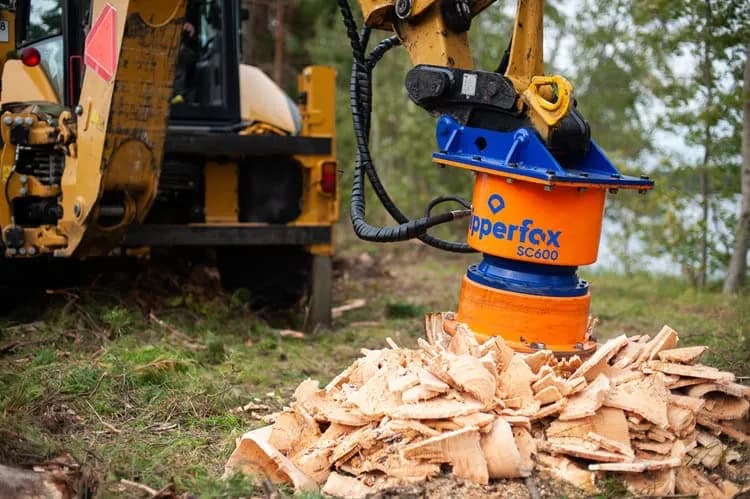
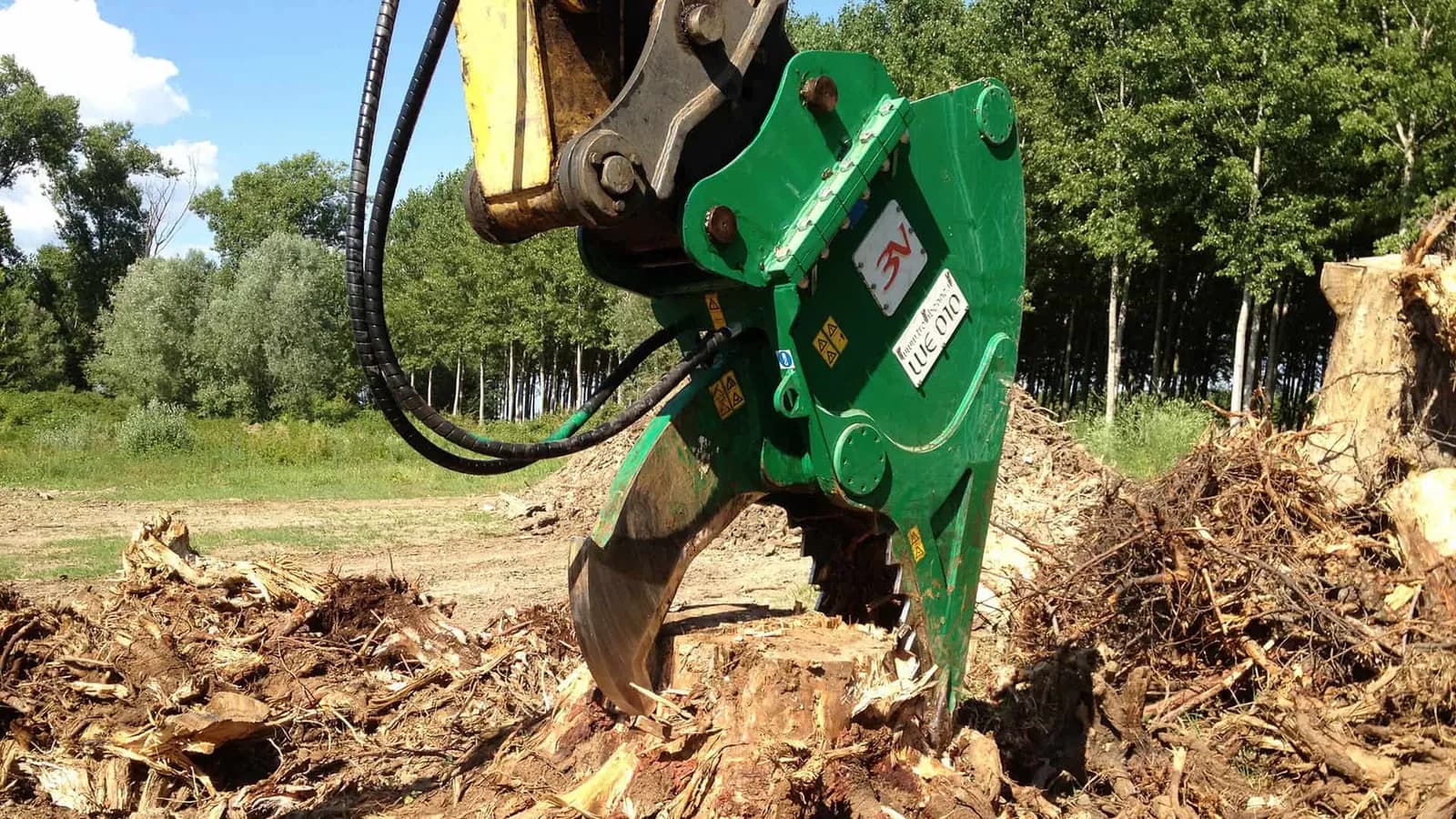
A stump grinder destroys a stump where it stands, in the ground, converting it to shavings. A stump cutter is a set of powered pincer jaws that splits and sizes stumps and large roots, either after they have been pulled from the ground or by slicing roots still in it.
Different tool. Different job. Different customer. If a supplier uses the terms interchangeably, slow the conversation down.
What a stump cutter is actually for
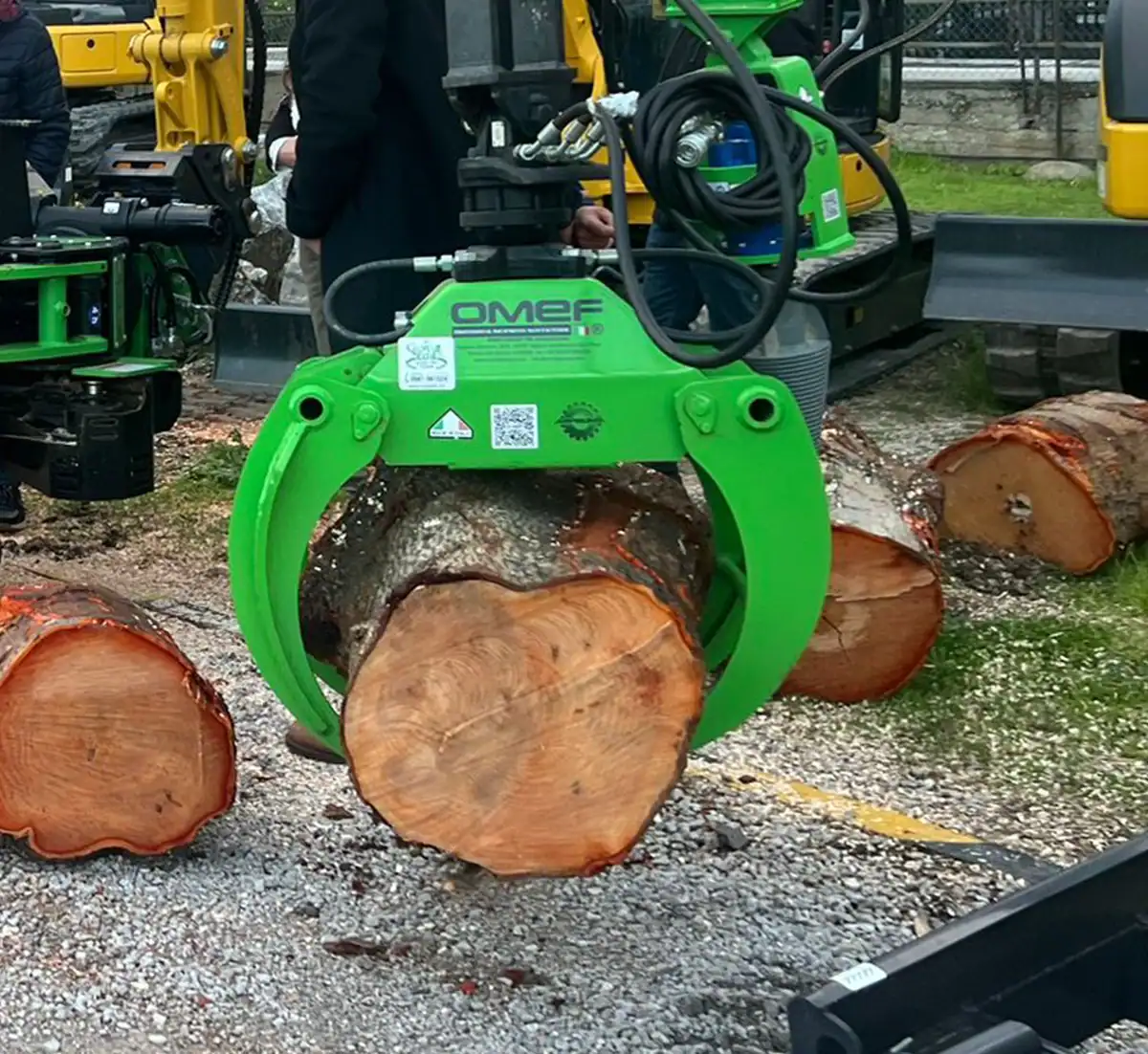
The cutter exists because a whole stump is a logistics problem. It is heavy, irregular, wet, and it does not fit anything. Uncut, it is a truck movement and a tipping fee. Cut, it becomes feedstock.
Three things happen when you split a stump down:
It dries faster. Exposed surface area goes up sharply. Wet stump wood has close to no value. Dried stump wood has some.
It fits the next machine. Chippers, shredders and grinders all have infeed limits. A cutter sizes material to those limits so it can enter the processing chain instead of sitting in a pile.
It stops being a disposal cost. This is the commercial heart of the category. You are converting an outgoing line item into either an avoided cost or a saleable product.
Who buys one
Not the same buyer as the grinder. The cutter customer is usually:
- A land clearing contractor already pulling stumps with an excavator, who is paying to cart them off site
- A biomass or green waste operation feeding a chipper or shredder
- A forestry contractor on stump harvesting work
- A civil contractor on a large clearing package where the disposal volume is the problem, not the extraction
If you are removing twelve stumps on a suburban block, this is not your tool. Look at the stump grinder.
The range, and what it means for your machine
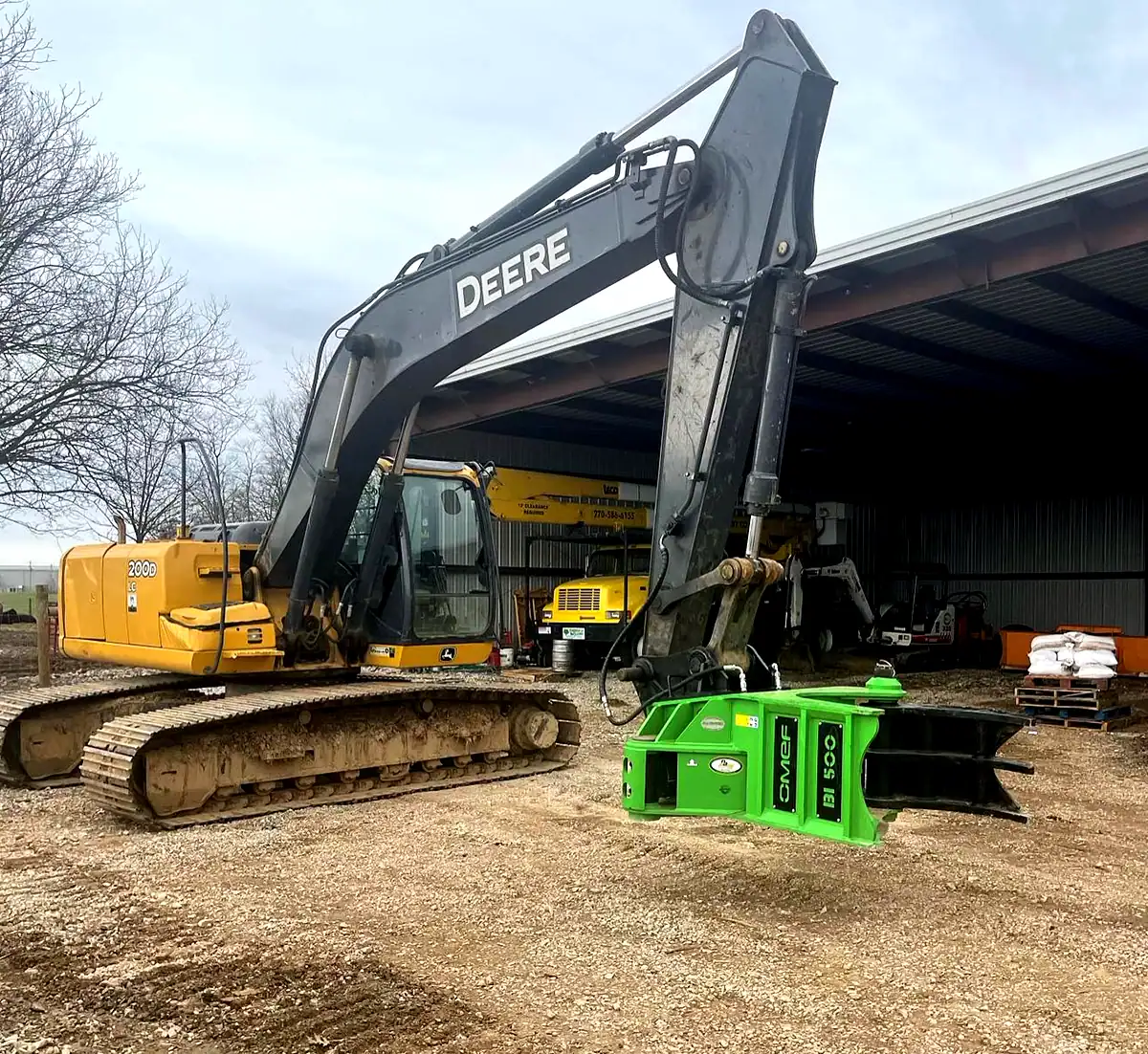
Machinery Specialist supplies the Trevi Benne WE series, an Italian-built pincer cutter built on Hardox wear plate.
| Model | Unit weight | Carrier range | Jaw opening |
|---|---|---|---|
| WE10 | 1,190 kg | 11.5 to 18 t | 980 mm |
| WE15 | 2,240 kg | 20 to 28 t | 1,400 mm |
Specifications are supplier-published and subject to change. Confirm the current sheet before purchase.
Two things stand out immediately.
This is a mid-to-large excavator tool. There is no compact option. The entry point is an 11.5 tonne machine. If your fleet tops out at 8 tonnes, this category is closed to you until the fleet changes.
Jaw opening is the spec that decides everything. It sets the maximum stump or root diameter you can take in one bite. Undersize it and you are making multiple passes on every stump, which destroys the productivity argument that justified the purchase. Measure the stumps you actually deal with before you pick a model.
The commercial case
The maths on a cutter is unusually clean, because you are mostly avoiding a known cost rather than estimating a new revenue line.
Build the case on four numbers from your own jobs:
- Truck movements per hectare for stump disposal. What you currently pay.
- Tipping or disposal fee per tonne. What you currently pay.
- Volume reduction achieved by splitting. How many movements disappear.
- Value of the sized material, if any, as chip, biomass or firewood feedstock.
If items 1 and 2 are large on your current work, the cutter pays without needing item 4 to be true. If items 1 and 2 are small, the cutter needs a biomass market to work, and biomass markets in Australia are regional and inconsistent. That is the honest version.
Running cost
Jaw and blade wear. Stumps carry soil, grit and often rock lodged in the root plate. This is abrasive work and the wear surfaces are consumables. Hardox construction slows that down; it does not stop it.
Pin and bush wear. High-force pincer action, repeated. Budget for it.
Contamination-driven damage. The failure that actually costs money is a rock in the root ball. Clean the stump before you cut it where you can, and accept that you sometimes cannot.
Carrier load. Double-acting circuit, intermittent cycles. Kinder to a machine than continuous mulching.
The honest limitations
- It does not remove stumps. You still need an extraction method. The cutter handles what happens after.
- Minimum carrier size is genuinely a barrier. No workaround.
- Biomass economics vary wildly by region. Do not build the business case on a chip price you have not confirmed with an actual buyer in your area.
- It is a single-purpose tool. Unlike a grab or a shear, a cutter has limited use outside stump and root work. That concentrates your utilisation risk.
Buy, hire or subcontract
Cutters are the category where hire is hardest to arrange and subcontracting is most common, because the tool is specialised and the fleet base is small. That cuts both ways: harder to access, and less competition if you own one.
| Situation | Route |
|---|---|
| One-off clearing package | Subcontract the disposal, not the cutting |
| Recurring clearing work with real disposal cost | Buy, and price the saving into future tenders |
| You already run a chipper or shredder | Buy, the cutter is the missing link in your chain |
Compliance notes
Standard excavator attachment rules apply. Quick hitches must meet AS 4772-20081 or an equivalent such as ISO 13031-2016 with a secondary retention system. Because cutters routinely handle soil-laden material at height, guarding to ISO 8084 and a clear exclusion zone on the ground are both worth writing into your SWMS rather than treating as optional.
Questions to ask before you sign
- What is the jaw opening, and how does that compare to the stumps on my sites?
- What is the closing force, and at what circuit pressure is it quoted?
- Are the wear surfaces bolt-on replaceable or welded?
- What is Australian stock and lead time on jaw wear parts?
- Does the quote include a machine-specific bracket and hose kit?
- Can this model also cut roots in the ground, and what does that do to wear rates?
Grinding and cutting are opposite jobs
The most common category error in this market, drawn rather than described.
Frequently asked questions
01What is a stump cutter used for?
Reducing tree stumps so they dry faster and can be processed into chips, shreds or biomass. The Trevi Benne WE series can also be used to slice large tree roots while they are still in the ground.
02What is the difference between a stump cutter and a stump grinder?
A grinder destroys the stump in place, in the ground, producing shavings. A cutter splits and sizes stumps, usually after extraction, so they can be transported and processed. Different tools, different outcomes.
03What size excavator do I need?
The WE10 suits 11.5 to 18 tonne excavators and the WE15 suits 20 to 28 tonne machines. There is no compact model in this range.
04What are they made from?
The WE series uses Hardox steel wear plates for durability in abrasive stump and root work.
05Do I need one if I already have a grinder?
Usually not. The two tools solve opposite problems. Buy a cutter when disposal volume is your cost, and a grinder when stump removal in place is your scope.
References
- 1Standards Australia / WorkSafe Victoria — AS 4772 — Earth-moving machinery quick hitchesQuick hitch safety system requirement
Keep reading
This category is most often confused with one other: