Calculator
Pricing mulching work by the hectare
Tender rate per hectare
$1,133
Your cost per hectare
$944
Break-even, direct only
$700
| Productivity | Hours on site | Your cost / ha | Tender rate / ha | Margin held |
|---|---|---|---|---|
| 0.17 ha/hr | 68.6 hr | $1,770 | $1,133 | -56% |
| 0.26 ha/hr | 45.7 hr | $1,219 | $1,133 | -8% |
| 0.35 ha/hrYOURS | 34.3 hr | $944 | $1,133 | 17% |
| 0.44 ha/hr | 27.4 hr | $779 | $1,133 | 31% |
Read the productivity claim honestly
Halve the hectares-per-hour figure and watch the tender rate move. That sensitivity is the whole argument for measuring your own output on your own material before you price a job, rather than pricing from a brochure figure and discovering the difference on site.
Where hectare pricing goes wrong
- 01
Brochure hectares
Published productivity is a best case: light material, flat ground, an experienced operator and no interruptions. Measure your own output on your own material before you commit to a rate, because the difference between 0.5 and 0.25 hectares an hour doubles your cost base.
- 02
Dig-rate fuel
Mulching is continuous load on a machine designed for intermittent load. Fuel burn, cooling demand and service intervals all move. Costing a mulching hour at your excavation hourly rate understates it every time.
- 03
Teeth treated as a spare
In abrasive or stony ground, teeth are a monthly budget line, not an occasional order. Put a real hourly figure in above — including the downtime to change them — rather than absorbing it in overhead.
- 04
Mobilisation spread thin
Float on, float off and set-up are fixed per job, so they hit small jobs hardest. A twelve hectare job carries mobilisation comfortably; a two hectare job does not, and pricing both at the same per-hectare rate loses money on one of them.
Talk to a specialist
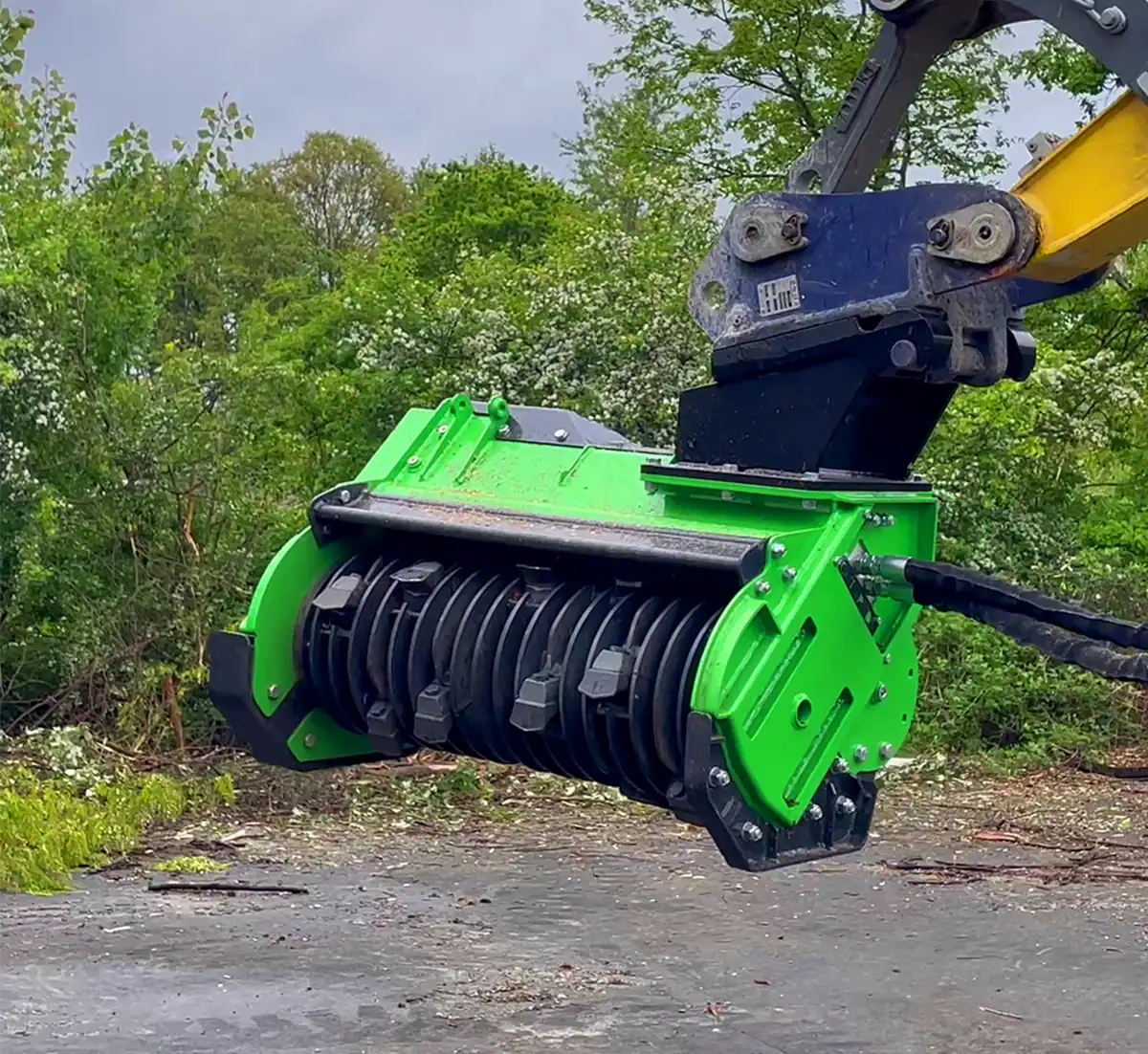
Rotor choice is the decision, not the model number. Tell us the material you are clearing and we will tell you which rotor suits it.
Request a quote →