What to take away
- 01Rotor choice is the decision, not the model number — fixed tooth or swinging hammer, open tip or closed tip.
- 02Mulching puts continuous load on a machine designed for intermittent load. Budget for cooling and tighter service intervals.
- 03Work is priced per hectare, so a productivity figure you have not measured yourself is margin you have not got.
That changes how you should evaluate the purchase. A mulcher is not bought on cutting capacity. It is bought on hectares per day at an acceptable tooth cost.
The three tools inside this category
They get grouped together and they are not interchangeable.
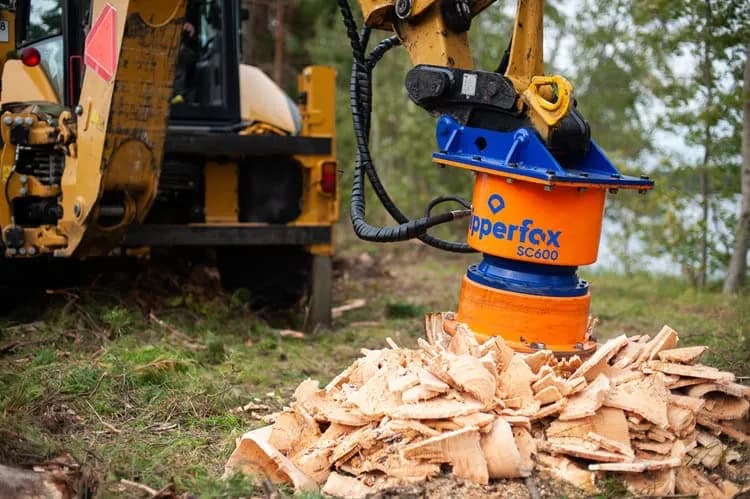
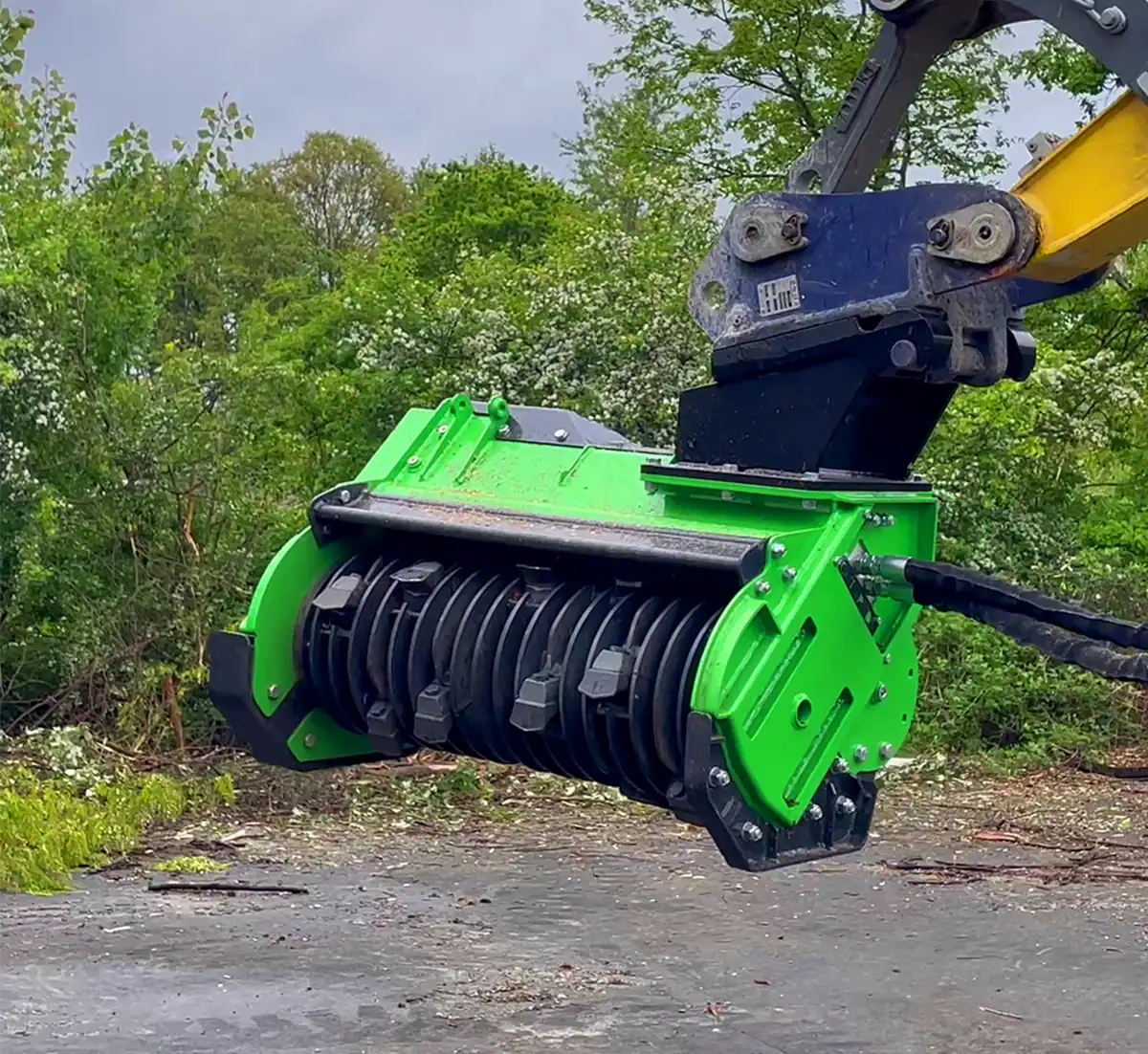
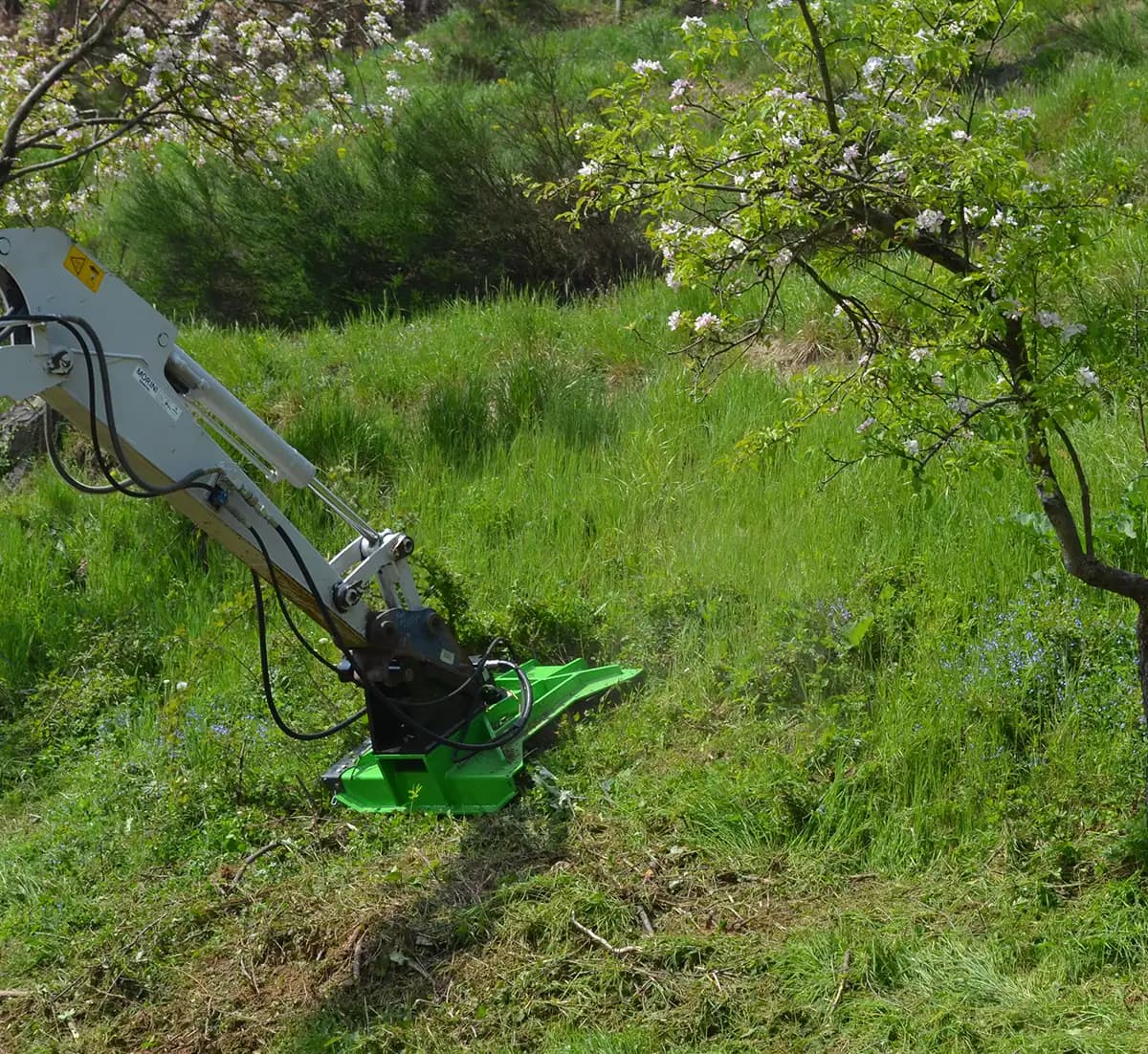
Excavator mulcher. The heavy tool. Shreds grass, brambles, shrubs and standing woody material. The OMEF TE series handles vegetation up to around 20 cm in diameter depending on model. This is your land clearing and fuel reduction machine.
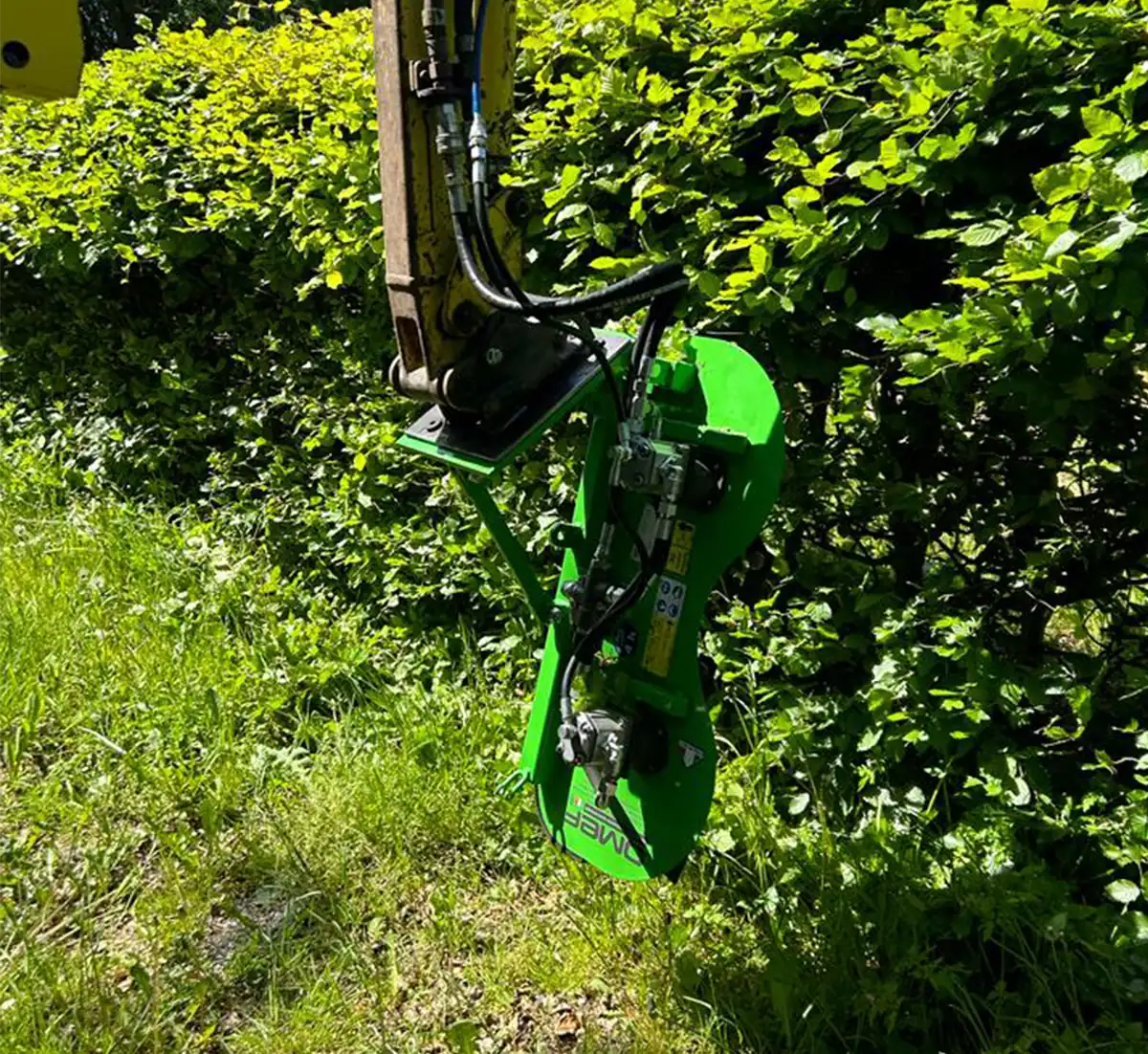
Excavator mower. Not a mulcher. The OMEF MOW uses a double ball-bearing rotor driving 24 nylon mowing wires. It is for grass, weeds and small shrubs in gardens, parks, flower beds and landscaped areas. It produces a clean finish in decorative spaces. It will not touch woody material.
Brush cutter. The middle option. Grass, hedges, bushes and small logs up to about 5 cm diameter. Landscaping and maintenance work rather than clearing.
Buying the mower when you needed the mulcher is the most common mis-purchase in this category, and it usually happens because a quote came back cheaper.
The OMEF TE series
| Parameter | Detail |
|---|---|
| Models | 10 |
| Carrier range | Approximately 1 to 30 t |
| Cutting capacity | Vegetation up to around 20 cm diameter, model dependent |
| Rotor options | Hammers, knives, or fixed-teeth |
| Motor options | Cast iron or piston, hydraulically controlled by valve block |
| Hydraulic line | Single-acting |
| Frame | Reinforced steel with internal protection for motor and belts |
| Safety | CE-compliant rubber guards, protective flaps with adjustable chains |
| Supply | Mounting bracket and hose kit available on request |
Specifications are supplier-published and subject to change. Published capacity figures vary between sources on this range, so confirm the exact figure for your chosen model in writing before you order.
Rotor choice is the decision, not the model number
Ten models sounds like the hard choice. It is not. The rotor is.
Rotor and tool selection is driven by two variables:
Type of vegetation. Grass, shrubs, or woody plants. Each wants a different tool geometry.
Type of terrain. Earthy, stony, or wooded. This is the one that decides your running cost.
Broad guidance:
- Hammers are the forgiving option. They tolerate rock and buried debris better and are the usual choice for unknown or contaminated ground.
- Fixed teeth cut faster and finer in clean conditions and produce better mulch quality. They are less tolerant of impact.
- Knives suit lighter, greener material where finish matters.
Pick the rotor for the worst ground you will work in regularly, not the best. A fixed-tooth rotor on a site full of ironstone is a very expensive lesson.
Hydraulics: this is where mulchers punish carriers
Mulching is continuous, high-draw, sustained-load work. It is the hardest thing most excavators will ever be asked to do hydraulically.
Three things to get right:
Flow and pressure at the tool. Not what the machine is rated at on paper. What actually arrives at the coupler under load, through your hoses, at operating temperature.
Case drain. Piston motors need drainage. The TE series motors are hydraulically controlled by a valve block that optimises pressures and flow rates, which helps, but drainage requirements still have to be confirmed per configuration. On the MOW mower the supplier is explicit: it requires a hammer line and, unless it has a self-draining motor, a drainage line as well.
Heat. Continuous load generates continuous heat. A carrier that is fine for an hour of mulching may not be fine for six. If you plan sustained production work, talk to your machine dealer about cooling capacity before you buy the attachment, not after.
Pricing mulching work, properly
Work backwards from the tender, not forwards from the spec sheet.
Cost per hectare = (machine + operator hourly rate + tooth cost per hour) / hectares per hour
The term most contractors get wrong is tooth cost per hour. In clean ground it is a rounding error. In stony or debris-filled ground it can exceed your fuel cost. Track it as its own line item from day one, per site type, and your second year of quoting will be dramatically more accurate than your first.
The other term people get wrong is hectares per hour. Stem density and stem size drive it far more than machine size does. Two hectares of light regrowth and two hectares of dense scrub with 15 cm stems are different jobs with the same number on the tender document.
Where mulchers win and where they lose
Win:
- Area-based clearing where material has no value
- Fuel reduction and firebreak work
- Roadside and corridor maintenance on recurring contracts
- Sites where removal of material is prohibited or prohibitively expensive
- Erosion-sensitive ground, where leaving mulch in place is an environmental benefit
Lose:
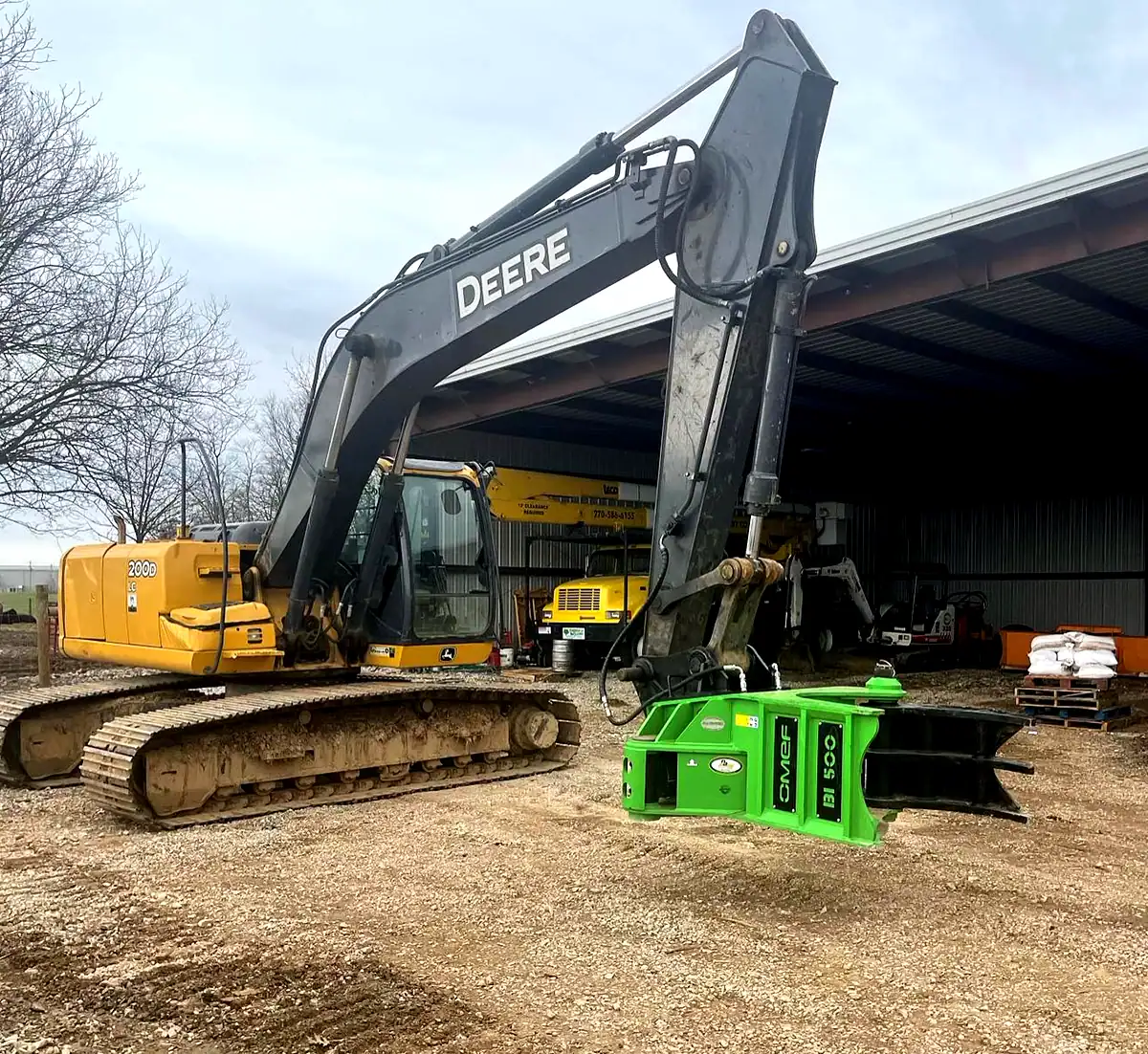
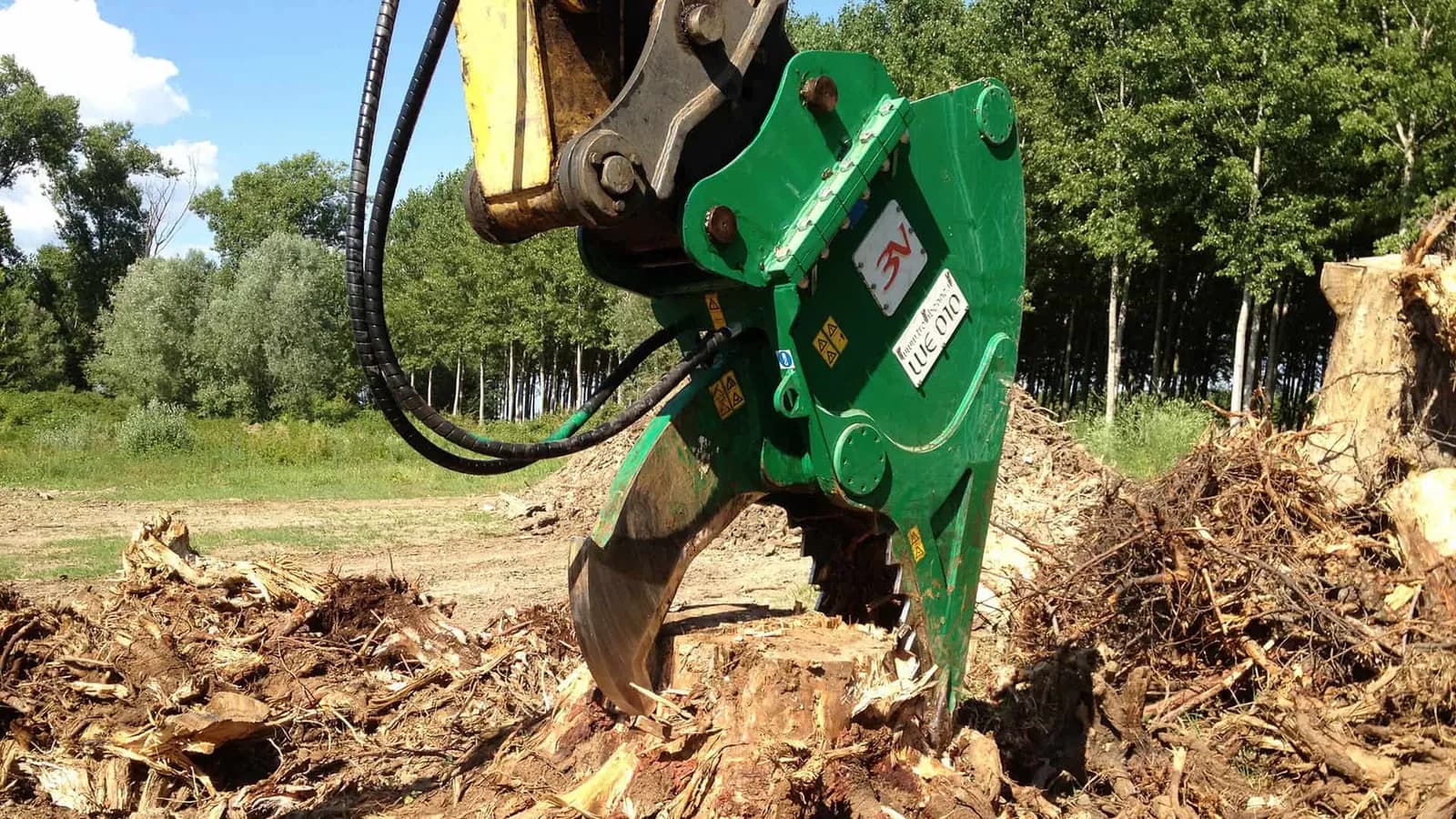
- Where timber has commercial value. You are destroying an asset. Use tree shears instead.
- Stems above the rotor's capacity. Forcing them is how rotors and motors die.
- Rocky ground with fine-finish requirements, because tooth cost eats the margin
- Confined urban sites where thrown material is a liability
The honest limitations
- Capacity figures assume the right material. A 20 cm green sapling and a 20 cm dead, hardened eucalypt stem are not the same cut.
- Mulch is not always acceptable. Some specifications limit mulch depth for fire load or weed reasons. Read the scope.
- Thrown debris is a real hazard. CE-compliant rubber guards and adjustable chain flaps are supplied for a reason. Do not remove them because they slow visibility.
- It is hard on the carrier. Expect tighter service intervals and plan for it.
- The finish is coarse. If the client wants a manicured result, you want the mower, not the mulcher.
Buy, hire or subcontract
| Situation | Route |
|---|---|
| One clearing package, no follow-on work | Subcontract |
| Recurring council or roadside maintenance contract | Buy. Recurring area-based work is exactly what ownership is for. |
| Fuel reduction seasonal work only | Buy if you can fill the shoulder seasons, otherwise hire |
| Occasional small vegetation tidy-up | Brush cutter or mower, not a mulcher |
Compliance notes
Guarding is the headline item. The TE series ships with CE-compliant rubber safety guards and protective flaps with adjustable chains, and those are part of the safe system of work rather than accessories. Operator protective structures under ISO 8084 cover the cab side of the same risk. Quick hitches must meet AS 4772-20081 or an equivalent such as ISO 13031-2016 with a secondary retention system, which matters more here than usual given the attachment weight and the vibration.
Questions to ask before you sign
- What is the confirmed cutting capacity for this exact model, in writing?
- Which rotor and tool configuration do you recommend for my terrain, and why?
- What is the required flow, pressure and drainage arrangement for my carrier?
- What do a full set of teeth cost, and what is Australian stock and lead time?
- Has this configuration been run in Australian hardwood regrowth, and can I see it?
- Does the price include the mounting bracket and hose kit for my machine?
In the field
Frequently asked questions
01What can a forestry mulcher cut?
The OMEF TE series is designed for grass, shrubs, reeds and plants up to around 20 cm in diameter depending on model, in both urban and forestry settings. Confirm the exact figure for the model you are quoting.
02What size excavator do I need?
The TE range spans models suitable for excavators from about 1 tonne up to 30 tonnes, so the range covers compact machines through to heavy forestry carriers.
03What is the difference between a mulcher, a mower and a brush cutter?
A mulcher shreds woody vegetation for clearing. A mower uses nylon wires for grass and small shrubs in decorative or confined spaces. A brush cutter sits between them, handling grass, hedges, bushes and small logs up to about 5 cm.
04Can I customise the mulcher?
Yes. Rotors and cutting tools can be selected for the vegetation and terrain, and motor options are matched to the operating machine.
05What hydraulic connection does it need?
All mulchers in the TE range run a single-acting hydraulic line, with pressures and flow rates optimised by the valve block. Drainage requirements depend on motor configuration and should be confirmed for your setup.
References
- 1Standards Australia / WorkSafe Victoria — AS 4772 — Earth-moving machinery quick hitchesQuick hitch safety system requirement
Keep reading
This category is most often confused with one other: