That matters, because it changes the question. The question is almost never "which attachment is best". It is "which attachment turns my existing carrier into a second revenue line without blowing up my maintenance bill".
This guide is written for that decision. It covers the eight attachment categories that make up a working forestry fleet in Australia, what each one actually earns its keep doing, and how to match one to the machine already sitting on your float.
The eight categories, and what each one is for
| Category | Core job | Carrier range | Buy it when |
|---|---|---|---|
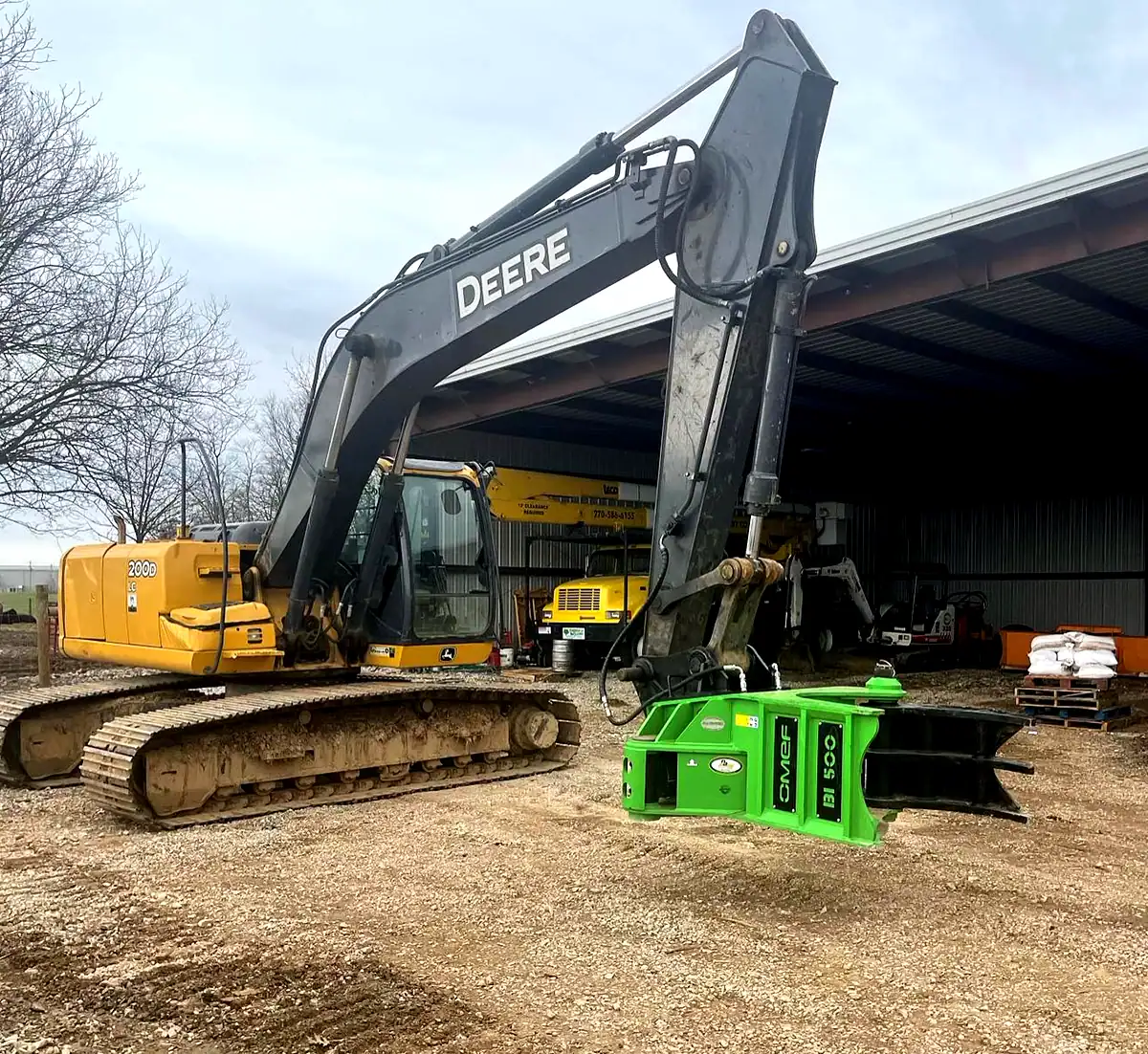
| Tree shears | Fell and hold standing timber in one motion | 2 to 50 t | Volume felling, thinning, hazardous trees near assets |
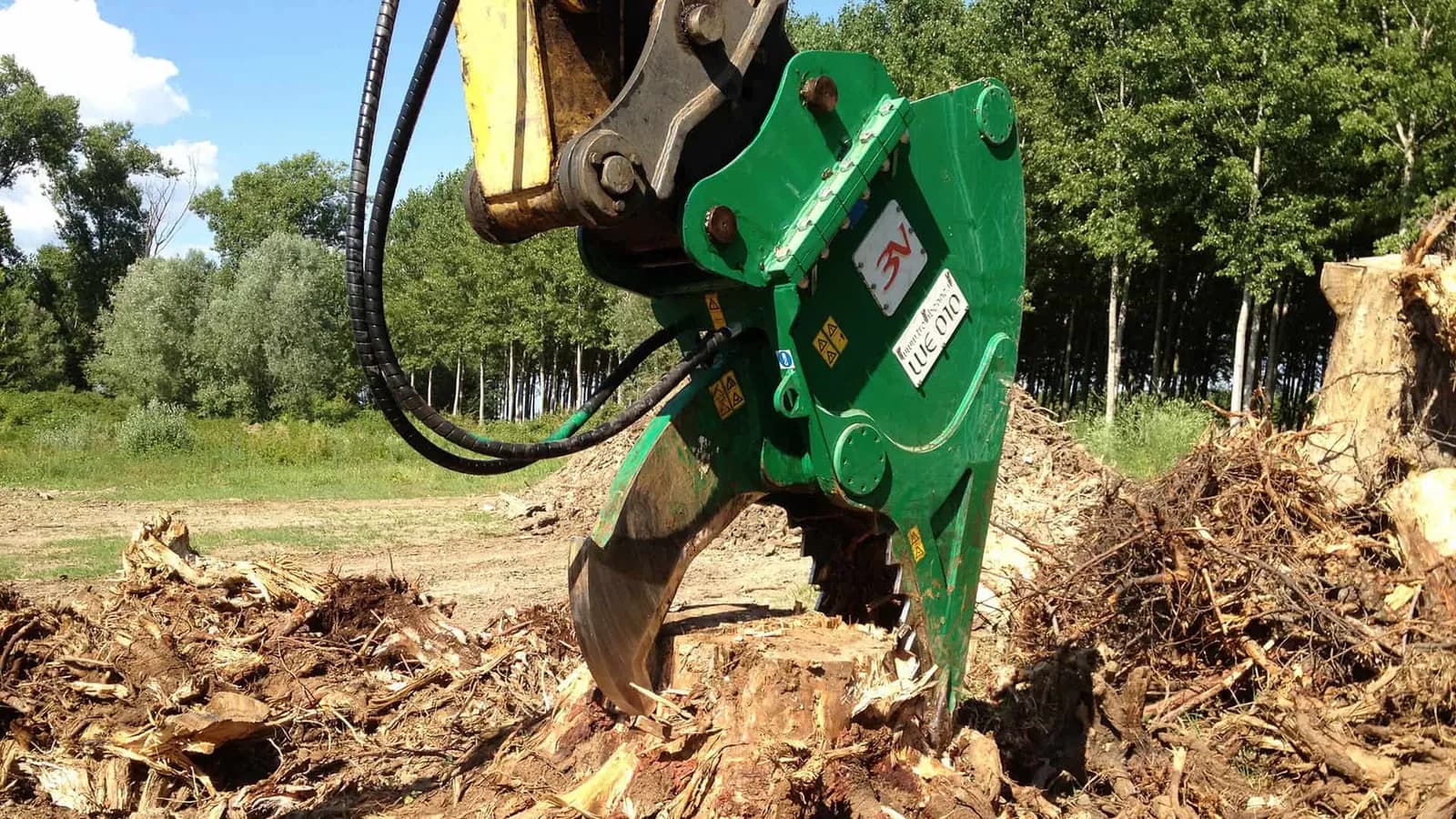
| Stump cutters | Split and size extracted stumps for processing | 11.5 to 28 t | You are already pulling stumps and need them chip-ready |
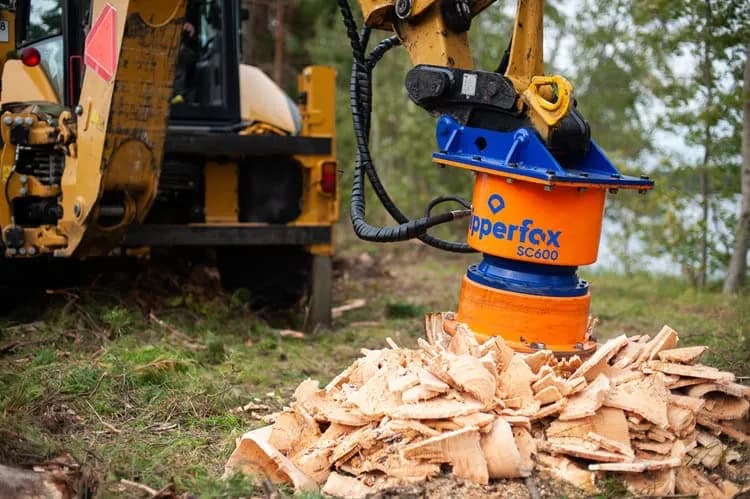
| Stump grinders | Destroy stumps in place, in ground | 1.5 to 30 t | High stump counts, urban sites, no spoil tolerance |
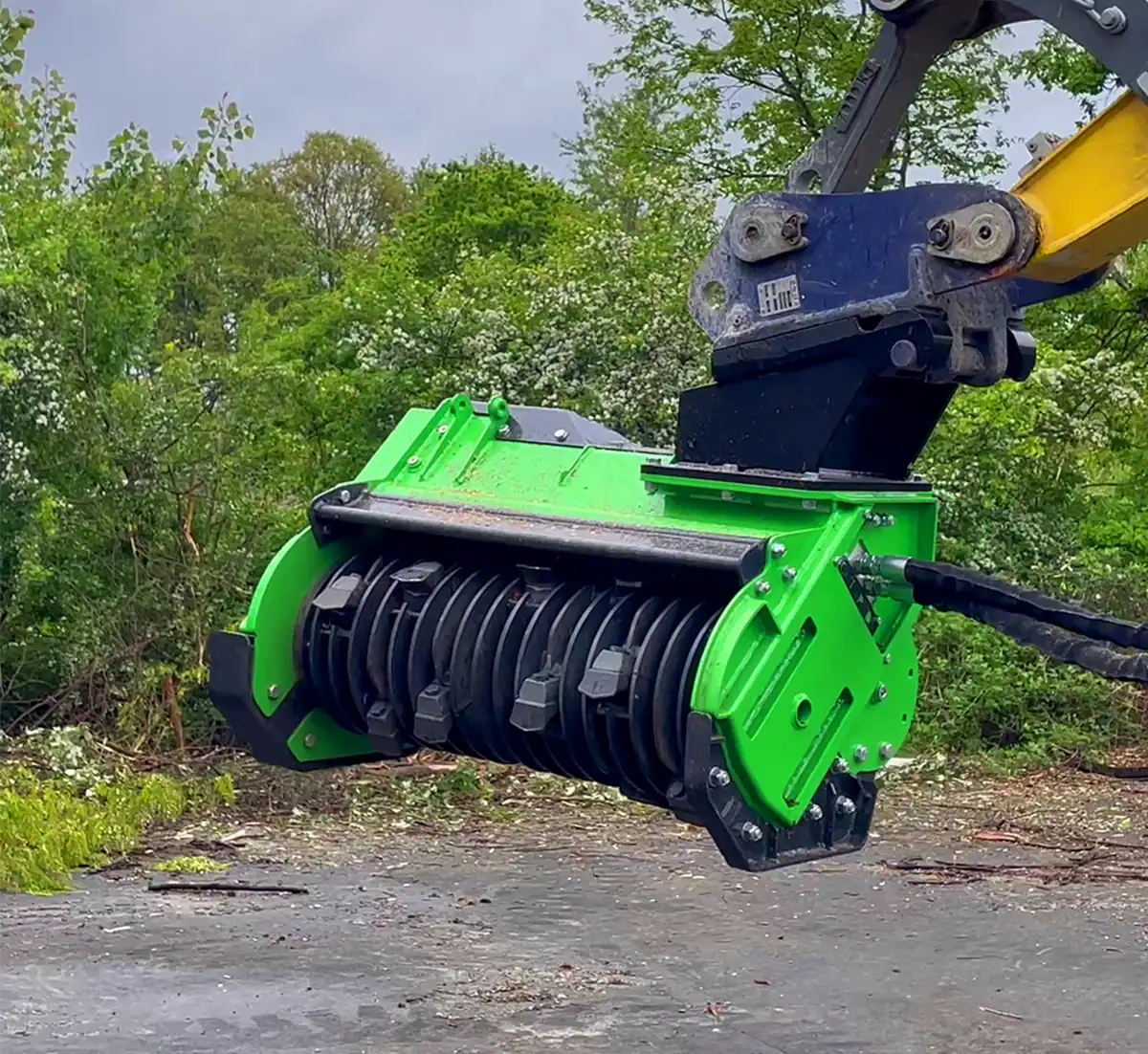
| Forestry mulchers | Reduce standing vegetation to mulch in one pass | 1 to 30 t | Area-based clearing, roadside, fuel reduction |
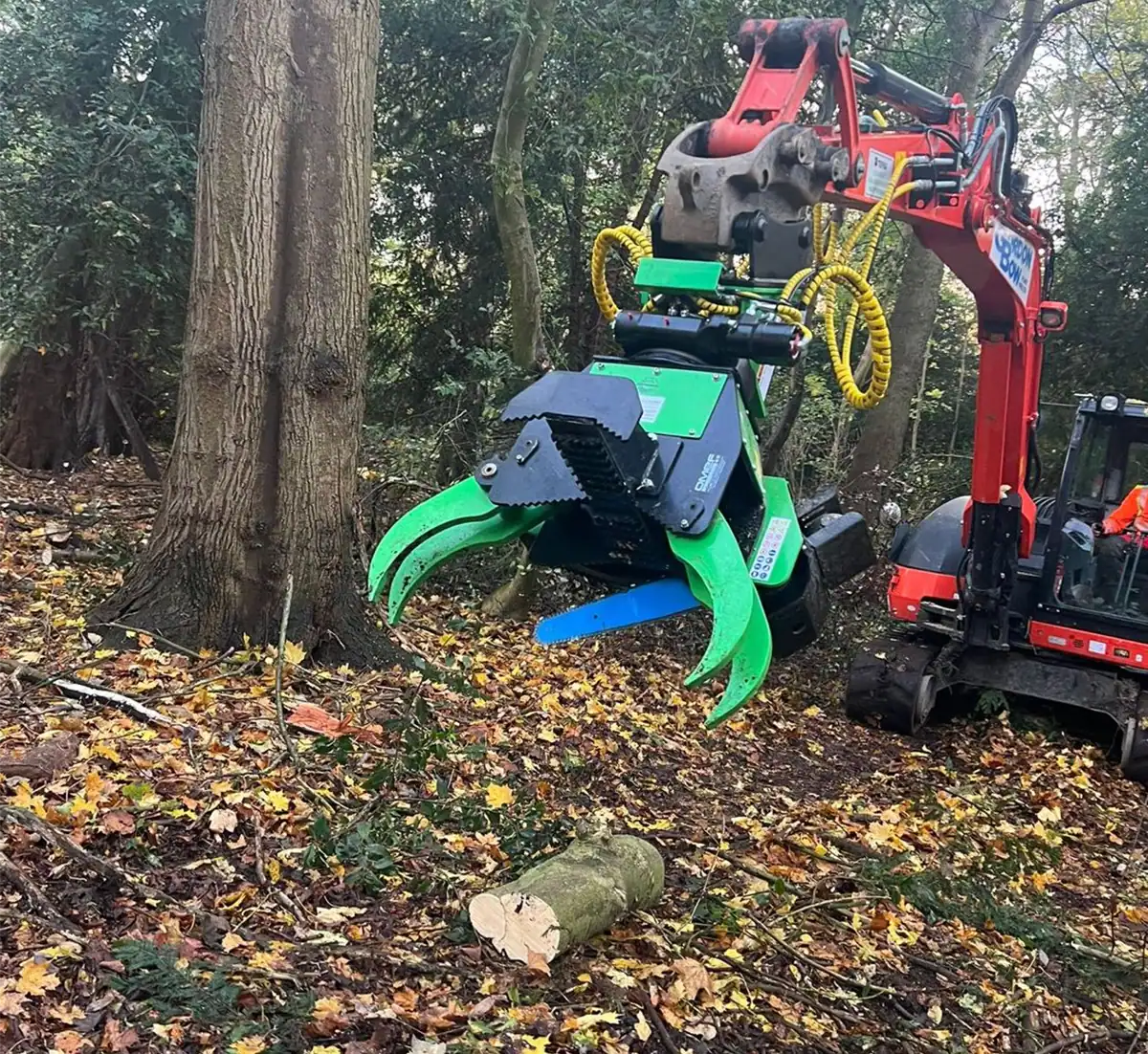
| Grapple saws | Cut and hold simultaneously, from the ground | 3 to 30 t | Removing people from the cut zone, urban tree work |
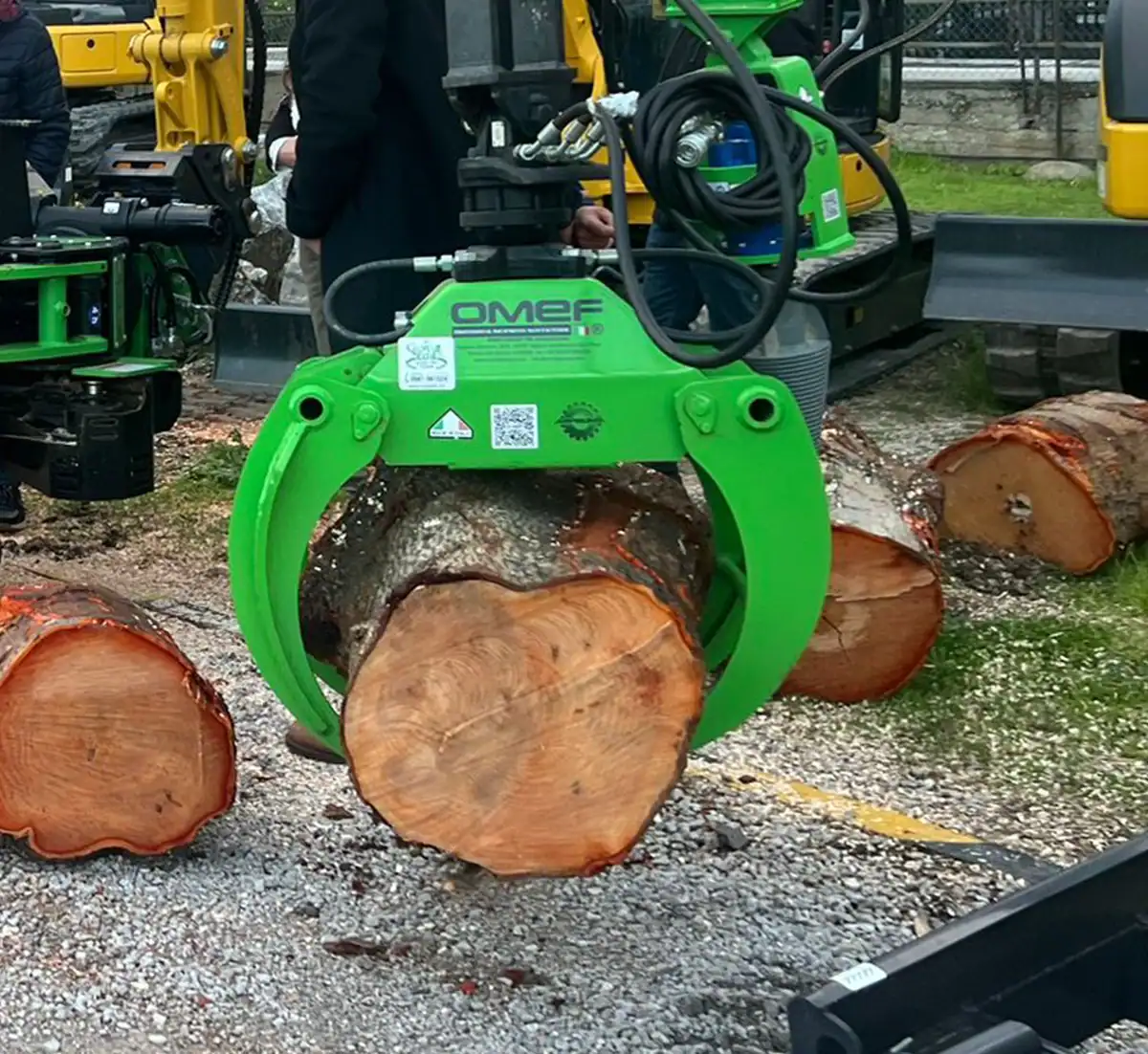
| Log and forestry grabs | Move timber, brash and biomass | 13 to 25 t typical | Chipper feeding, log decks, site clean-up |
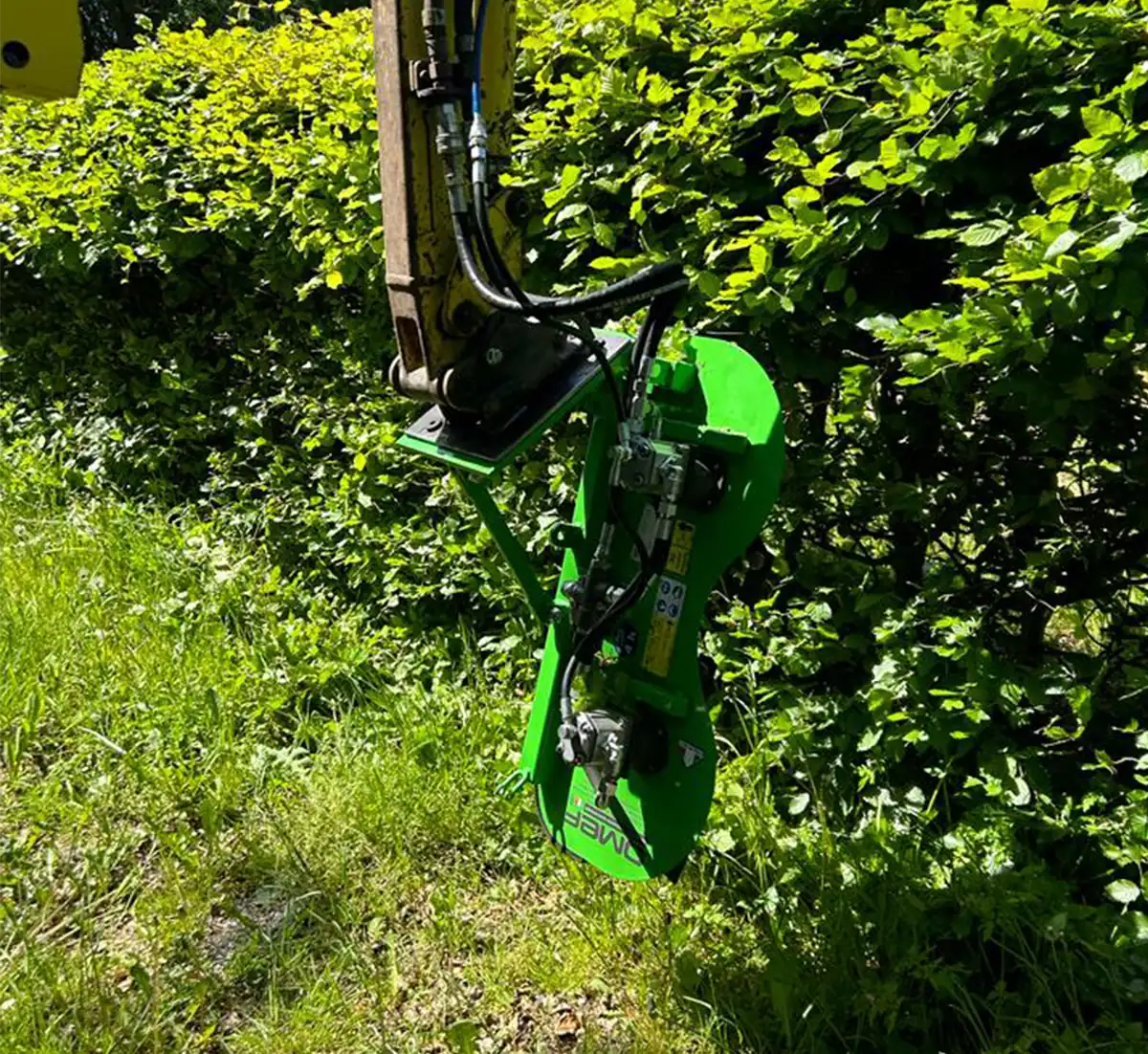
| Mechanical pruning | Trim, shape and cut without gripping | Excavator, backhoe, telehandler | Recurring maintenance contracts, roadside, orchards |
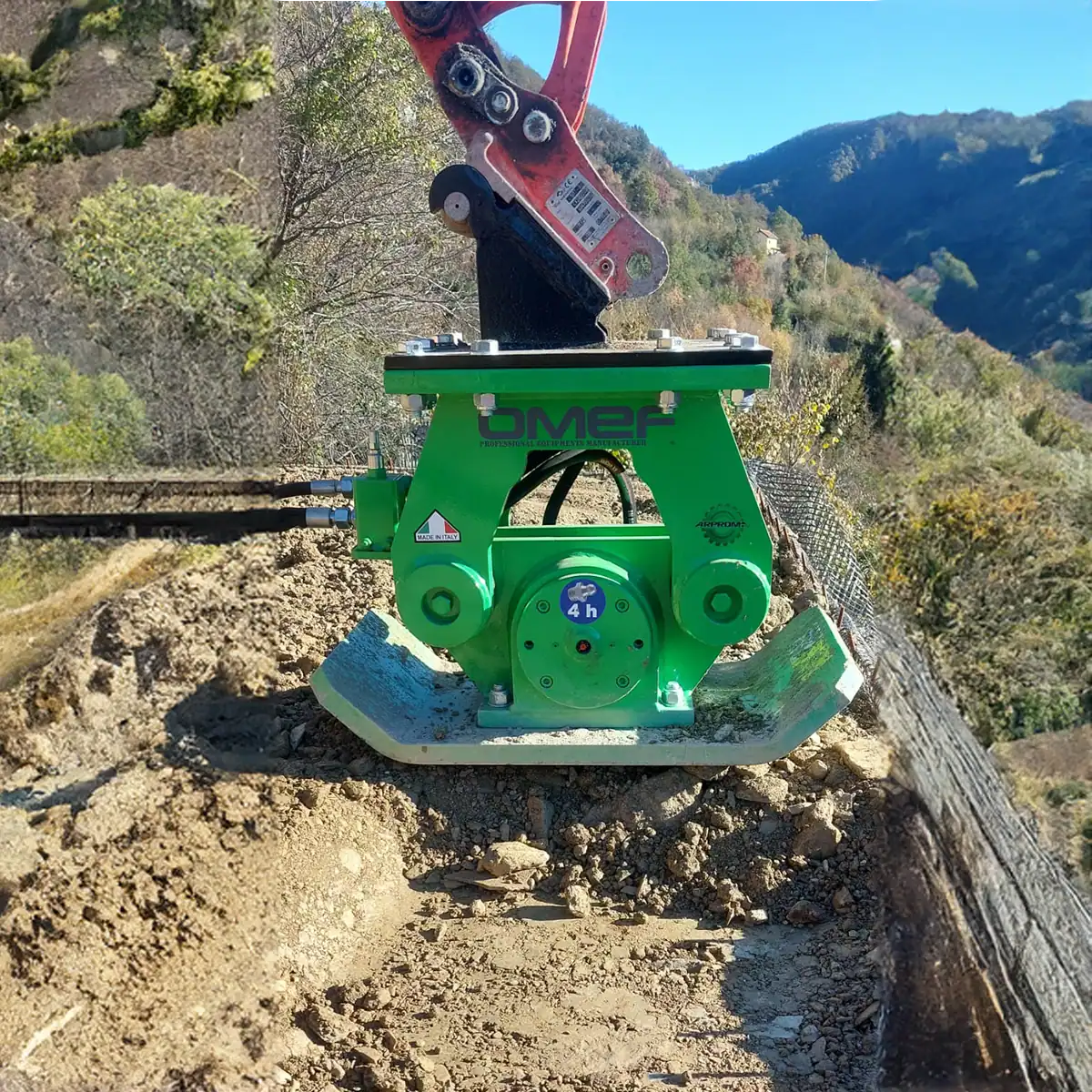
| Tillage and ground prep | Drill, compact and work soil after clearing | 2 to 20 t | You want the rehabilitation work as well as the clearing |
Detail pages for each sit below this one. Read the category page before you read any brochure.
Why the market is buying right now
Australia has roughly 1.71 million hectares of commercial plantation1, according to ABARES, with just over 1 million hectares of exotic softwood (predominantly Pinus radiata) and about 0.67 million hectares of hardwood plantation, mostly eucalypt species. That estate is the visible forestry market. It is not where most attachment demand comes from.
The larger and steadier demand sits in three places:
Utility vegetation management. Distribution network operators run continuous, regulated, multi-year clearance programs. These are contracted out, audited, and renewed. Trimming is generally carried out to meet Australian Standard AS 43732, which can require branches be cut back to growth points. That is recurring revenue with a compliance floor, and it rewards mechanisation.
Bushfire fuel reduction. State hazard-reduction programs commit to treated-hectare targets rather than project-by-project budgets. The NSW Enhanced Bushfire Management Program, for example, was built around treating an average of 135,000 hectares of bushland each year3. Area targets favour mulchers and shears over hand crews.
Development and civil clearing. Site preparation, road corridors, solar and wind projects, subdivision. Lumpy, competitive, and the reason most contractors buy their first forestry attachment.
The plantation sector itself is under pressure, not expanding. IBISWorld puts the Australian forestry and logging market in decline at around 2.0% CAGR between 2021 and 20264, with growth expected over the following five years. Access constraints are part of it: in September 2025 the NSW Government announced a temporary moratorium on timber harvesting across 176,000 hectares of state forest on the Mid North Coast as part of establishing the Great Koala National Park.
Honest read on that: if your business case depends entirely on native hardwood harvest volumes, build it conservatively. If it depends on vegetation management, fuel reduction and civil clearing, the drivers are structural and they are not going away.
The four questions that decide the purchase
Everything else is detail.
1. What carrier are you putting it on?
Attachment selection starts at the machine, not the catalogue. Every serious forestry attachment publishes an operating machine range, and those ranges are narrow for a reason. Undersize the carrier and you get tip-over risk, hydraulic starvation and a slow tool. Oversize it and you overload the attachment structure until something cracks.
Write down three numbers before you call anyone: machine operating weight, auxiliary hydraulic flow in litres per minute, and available working pressure in bar. Most disappointing attachment purchases in this market trace back to a buyer who knew the first number and guessed the other two.
2. Does your hydraulic circuit actually support it?
This is where deals go wrong. Forestry attachments differ sharply in what they demand from the circuit:
- Single-acting hammer line. Simplest. Mulchers and most trimmers run this way.
- Hammer line plus case drain. Piston motors usually need drainage. Skipping it kills motor seals.
- Double-acting. Grabs, shears and pruners that open and close.
- Dual circuit. Grapple saws typically need a saw line and a separate grapple and rotation line, valve-controlled.
As a worked example, the OMEF GS grapple saw range runs from 15 to 50 L/min on the smallest model up to 160 L/min on the largest, with rotation drawing its own supply on the bigger units. A 5 tonne excavator with a basic breaker circuit will not run a GS600 no matter how the invoice is worded.
3. What does the work actually look like?
Stem diameter, stem density per hectare, terrain, proximity to assets, and how much material you are allowed to leave behind. These four things decide the category more reliably than any sales conversation.
A clean example: if you must remove the stump completely and cannot leave spoil, you want grinding. If you are extracting stumps anyway and need them sized for biomass, you want a cutter. Same word in the brochure, entirely different machines and entirely different jobs. The stump grinder and stump cutter pages cover that distinction properly because it is the single most common category error in this market.
4. How many hours a year will it run?
The honest utilisation test. Attachments are cheap compared to carriers, but they are not free, and an attachment doing 150 hours a year is usually a hire decision rather than a purchase decision.
Rough guidance, and it is guidance rather than gospel: below about 200 hours a year, hire or subcontract. Between 200 and 500 hours, buy if the tool unlocks work you currently turn away. Above 500 hours, ownership almost always wins, and wear-part supply becomes more important than purchase price.
What the total cost actually is
Purchase price is the number buyers focus on and the smallest part of the decision.
Purchase. Driven by carrier class, steel grade, rotation, and whether you take a turnkey kit. Turnkey kits (machine-specific mounting bracket plus hose kit) cost more up front and are nearly always worth it, because a workshop-fabricated bracket that does not sit right will cost you more in cracked steel than the kit saved.
Wear parts. The dominant running cost, and it varies enormously by category. Mulcher teeth in abrasive or stony ground are a consumable line item you budget monthly. Shear blades are a periodic rebuild. Saw chains and bars on grapple saws are a weekly conversation. Ask every supplier for wear-part pricing and lead time before you sign, not after.
Carrier wear. Mulching and grinding put continuous load on a machine designed for intermittent load. Pumps, coolers and final drives feel it. If you intend to run a mulcher hard, budget for improved cooling and expect your carrier's service intervals to tighten.
Downtime. Parts availability in Australia is the difference between a two-day repair and a six-week one. This is the strongest argument for buying through a local distributor holding stock rather than importing direct on price.
We have deliberately not published dollar figures in this guide. Attachment pricing in Australia moves with exchange rate, spec, rotation options and carrier bracket, and a published number would be wrong within a quarter. The framework above tells you what moves the number so you can interrogate a quote properly.
Tax treatment, stated accurately
Most forestry attachments cost well above the instant asset write-off threshold, so the write-off is usually not the relevant mechanism.
The instant asset write-off threshold is $20,000 per asset5, and in the 2026-27 Budget it was announced to be made permanent from 1 July 2026 for small businesses with aggregated turnover up to $10 million. As at mid-2026 the enabling legislation had not passed Parliament, and until it does the standing legislated threshold for assets first used from 1 July 2026 is $1,000.
For an attachment costing more than the threshold, the asset joins the small business pool and depreciates at 15% in the first year and 30% in each year after. There is a timing trap worth knowing: the test is that the asset is first used or installed ready for use within the income year, not ordered or paid for. An imported attachment sitting on a wharf on 30 June does not qualify.
This is general information, not tax advice. Confirm your own position with your accountant before you time a purchase around it.
Safety and compliance you cannot skip
Quick hitches. Quick hitch devices should comply with AS 4772-20086 or an equivalent standard such as ISO 13031-2016, and AS 4772 requires a safety system ensuring the attachment cannot unintentionally disconnect if the primary retention system fails. Heavy forestry attachments swung at height make this a live risk rather than a paperwork item.
Operator protection. Forestry work introduces hazards a standard excavator cab is not built for, including side and rear intrusion from stems and flying debris. ISO 80847 covers operator protective structures, the grills and guarding that prevent objects entering the cabin, though it excludes broken chainsaw teeth from its scope. If you are felling or grinding near the cab, guarding is not optional.
Pruning standards. AS 4373 governs the pruning of amenity trees and is routinely written into council and utility contracts. Mechanised pruning still has to produce a compliant cut.
Where to go next
Each category page below is written to stand alone. Start with the one closest to the work you are quoting.
The four circuit types, side by side
This is where deals go wrong. A machine inside the published weight band still cannot run a tool whose circuit it does not have.
Single-acting
Oil out, oil back, one direction
Mulchers, most trimmers
Hammer line + case drain
Third low-pressure line returns motor leakage to tank
Grinders, cutters, piston-motor tools
Double-acting
Powered both ways, so the tool opens and closes
Grabs, shears, pruners
Dual circuit
Saw line plus a separate grapple and rotation supply
Grapple saws
Every carrier range on one axis
Carrier weight, tonnes
Published operating machine ranges, plotted on a log scale so the detail below ten tonnes stays readable. Find your machine on the axis and read down.
References
- 1ABARES, Department of Agriculture, Fisheries and Forestry — Australian plantation statisticsPlantation area and species composition
- 2Standards Australia — AS 4373 — Pruning of amenity treesPruning specification written into council and utility contracts
- 3NSW Office of Environment and Heritage — Enhanced Bushfire Management ProgramHazard-reduction hectare targets
- 4IBISWorld — Forestry and Logging in Australia (ANZSIC A0300)Industry size and trend
- 5Australian Taxation Office — Instant asset write-off for eligible businessesWrite-off threshold and small business pool rates
- 6Standards Australia / WorkSafe Victoria — AS 4772 — Earth-moving machinery quick hitchesQuick hitch safety system requirement
- 7International Organization for Standardization — ISO 8084 — Machinery for forestry, operator protective structuresOperator protective structures and guarding