Australian buyer’s guide · 2026 edition
Forestry attachments,
matched to the machine
already on your float.
Most businesses buying forestry machinery in Australia are not forestry companies. They are civil contractors, arborists, councils, utility crews and farmers. The question is never “which attachment is best”. It is which one turns an existing carrier into a second revenue line without blowing up the maintenance bill.
- Attachment categories
- 08
- Carrier range covered
- 1.5–50 t
- L/min flow window
- 15–160
- Supplied nationwide
- AU
The eight categories
What each one actually earns its keep doing
Read the category page before you read any brochure. Each one covers the carrier match, the hydraulic demand, the running cost and the honest limitations.
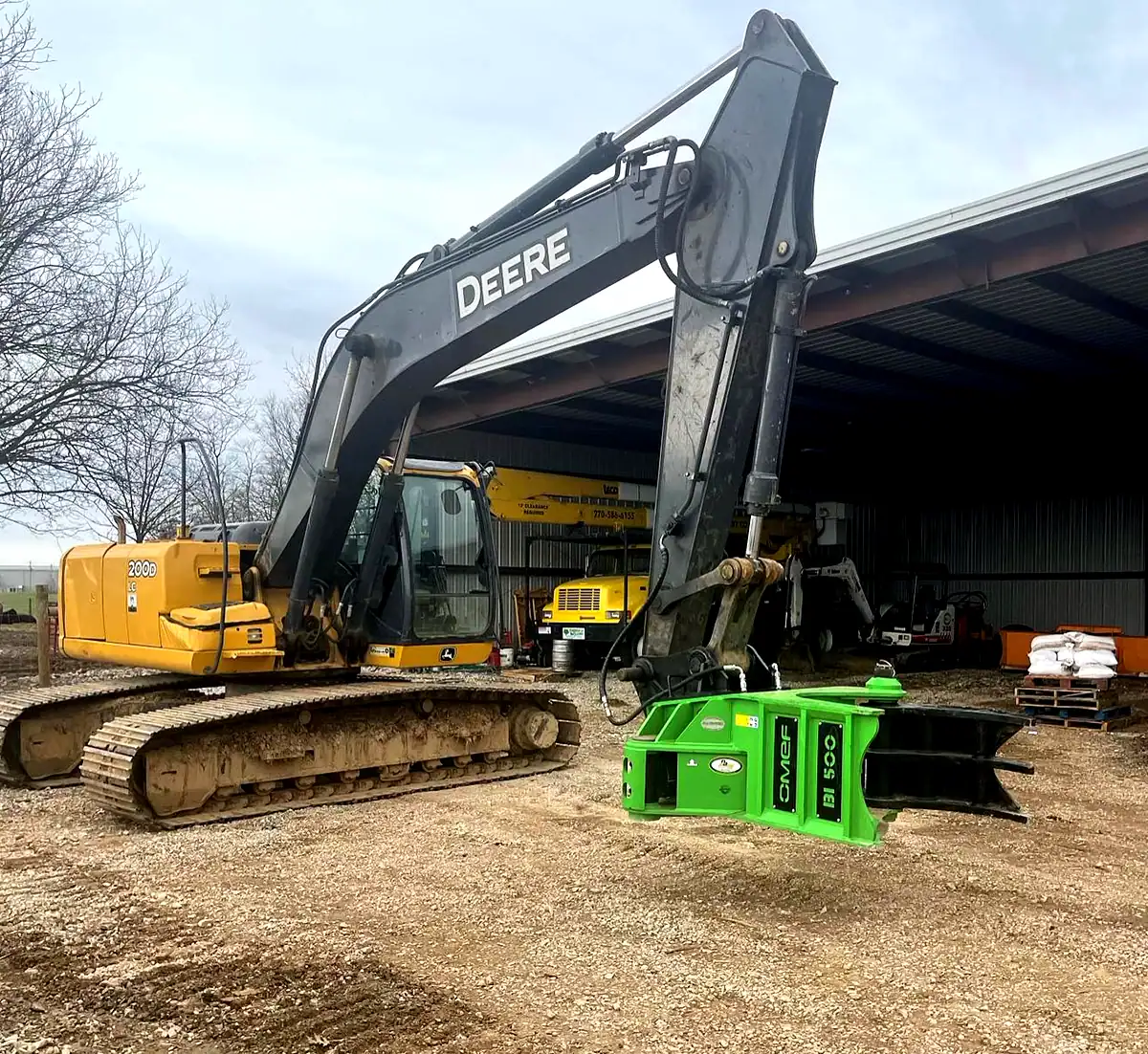
Tree Shears
Fell and hold standing timber in one motion
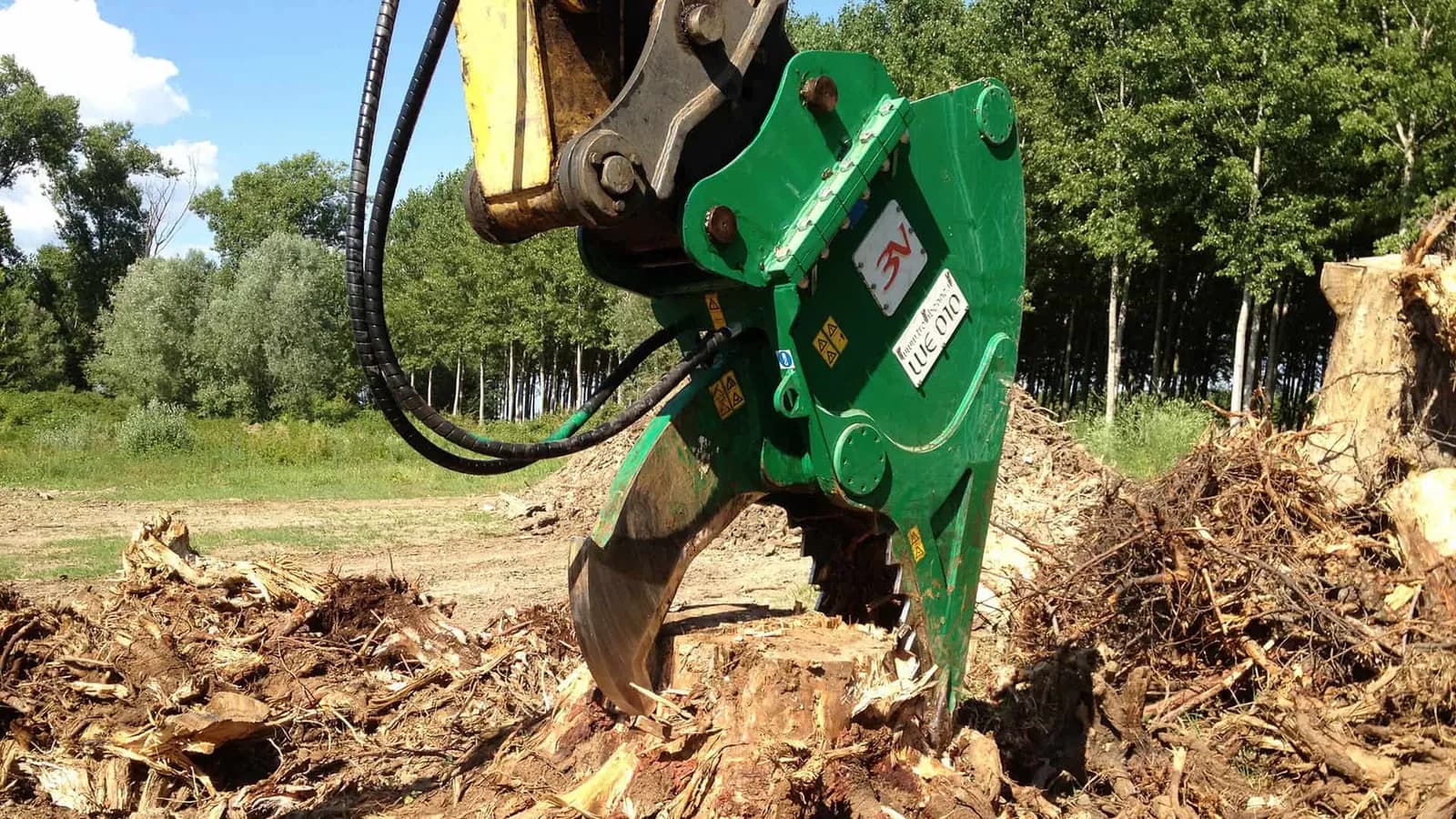
Stump Cutters
Split and size extracted stumps for processing
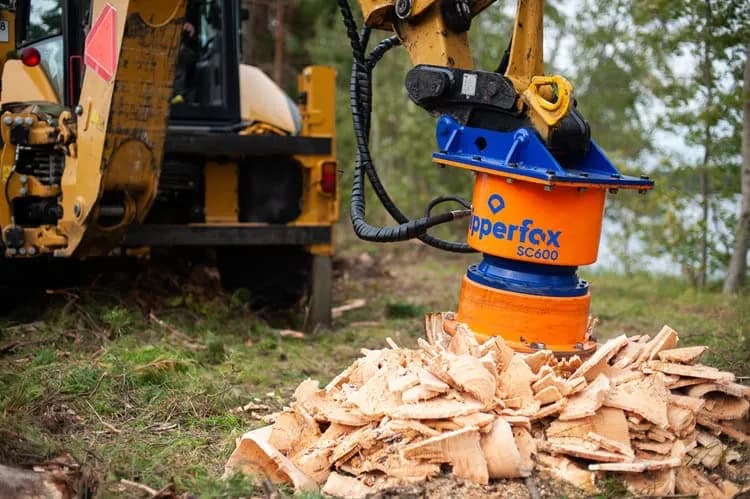
Stump Grinders
Destroy stumps in place, in ground
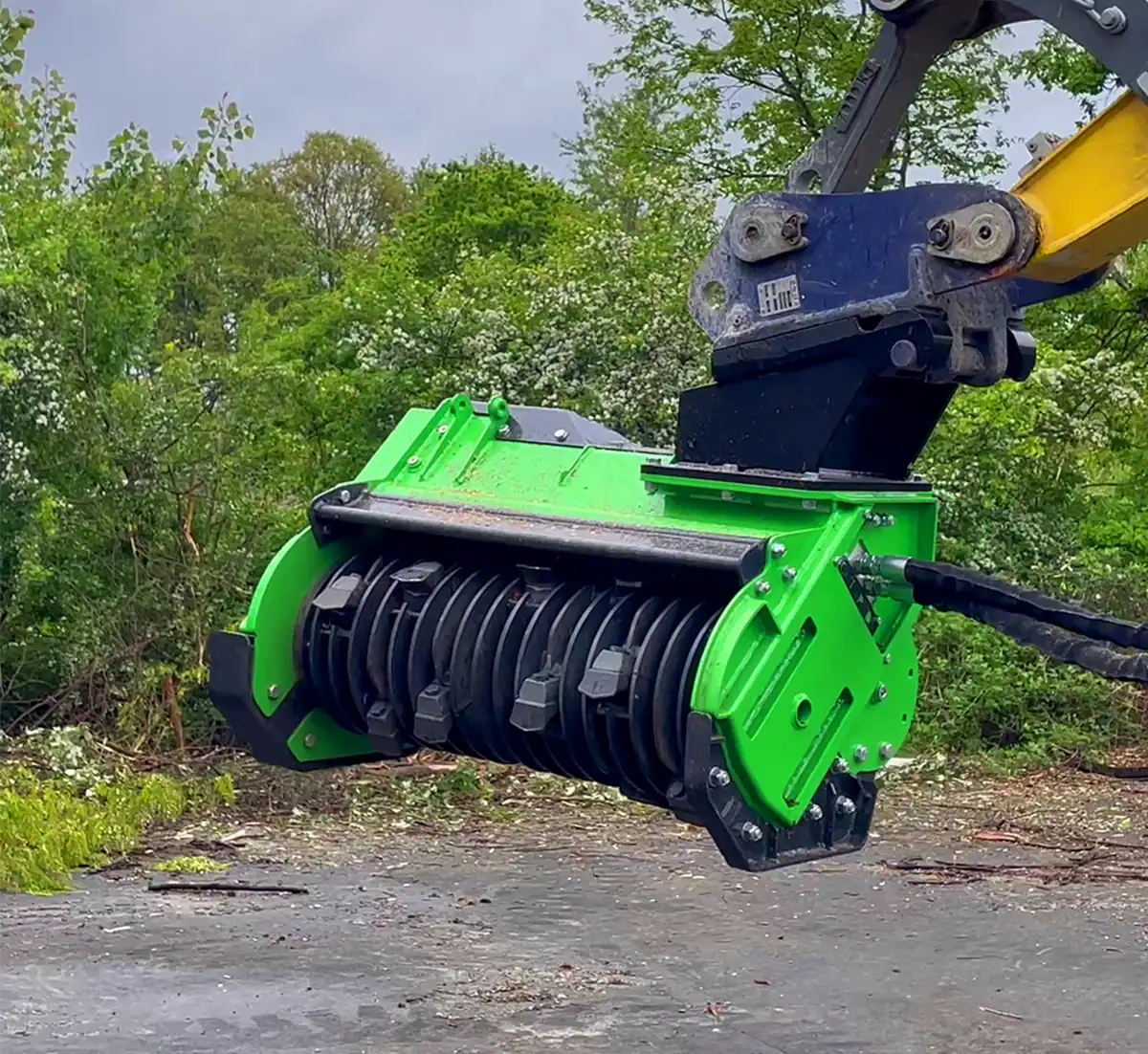
Forestry Mulchers
Reduce standing vegetation to mulch in one pass
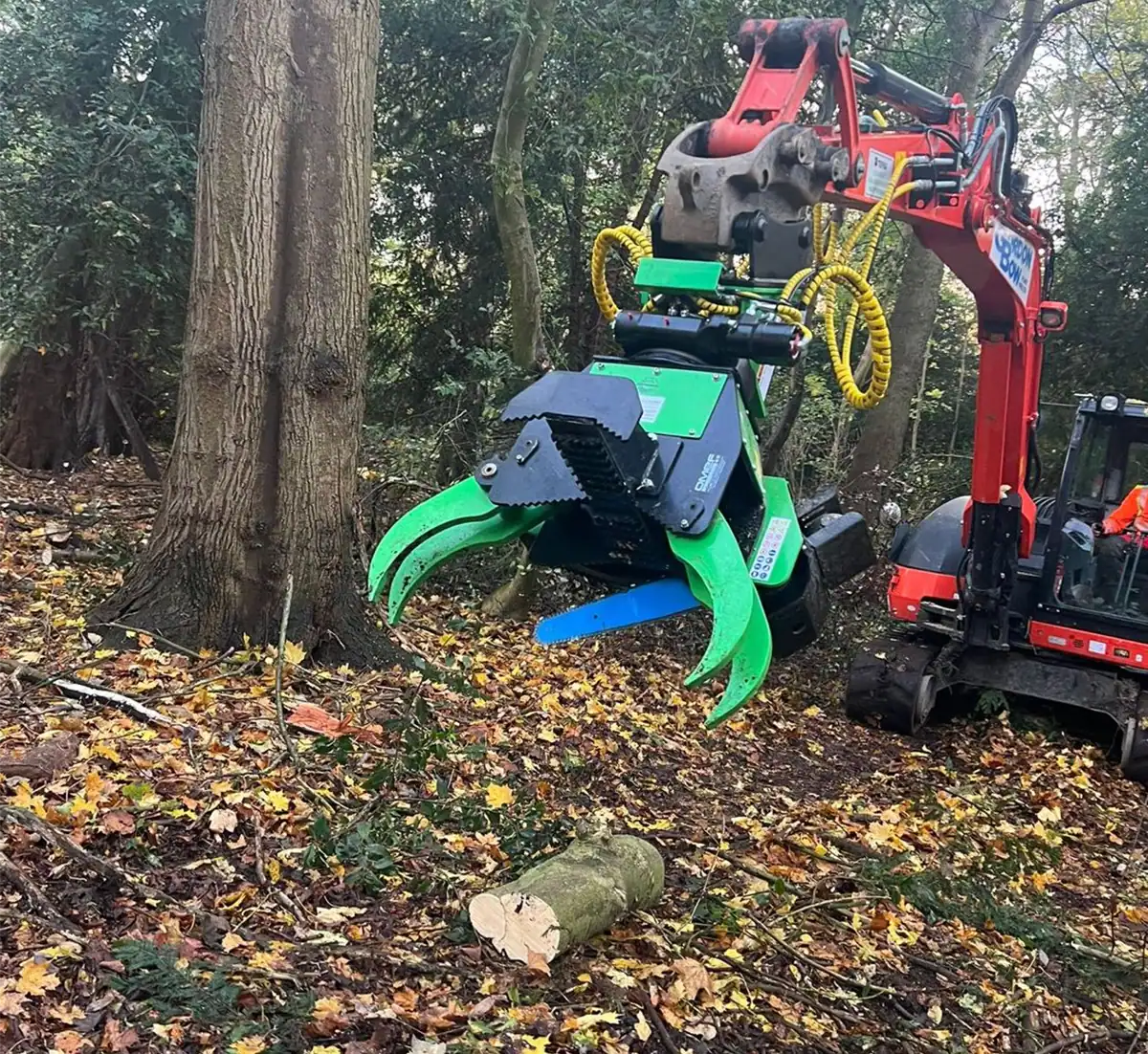
Grapple Saws
Cut and hold simultaneously, from the ground
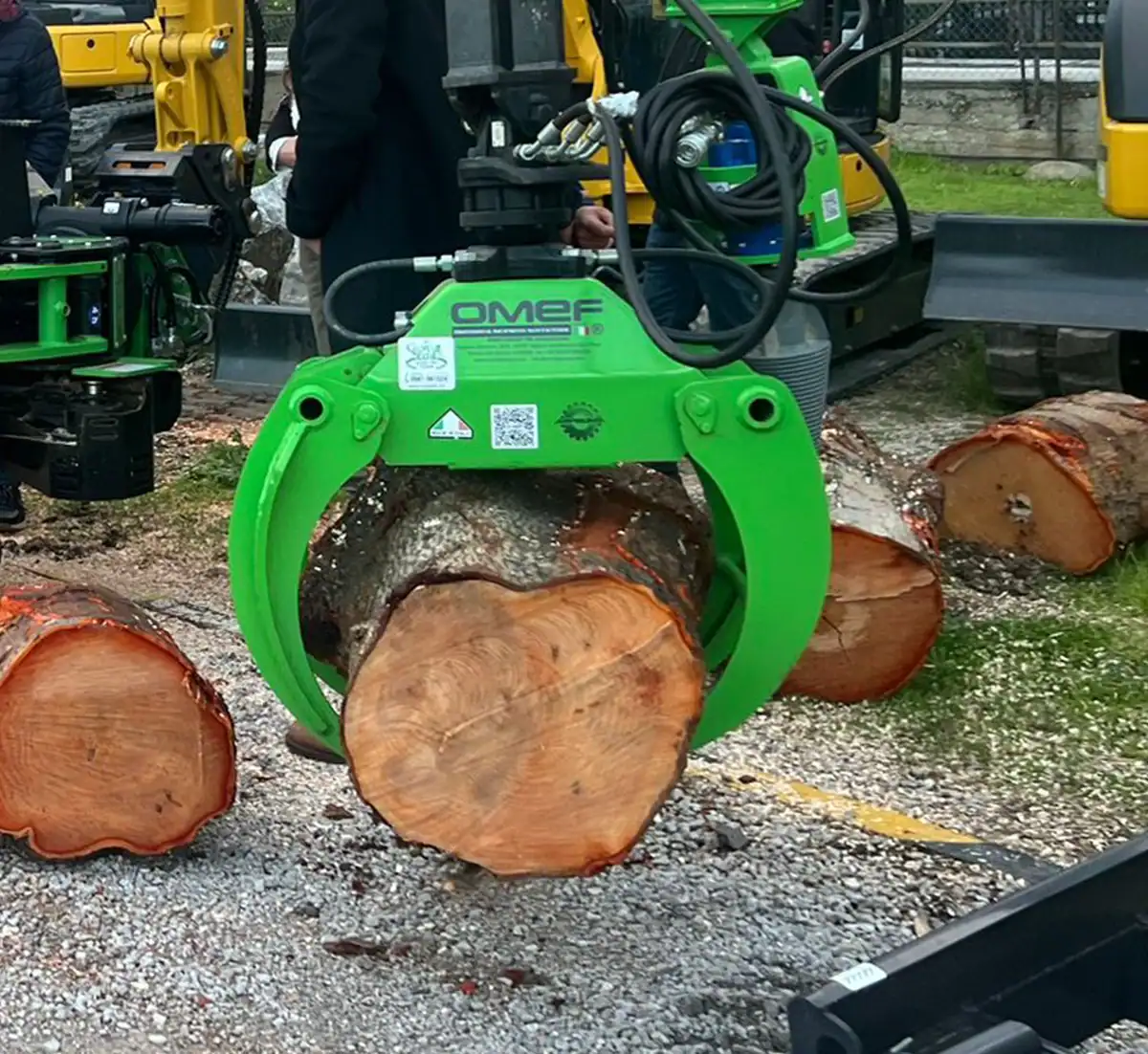
Log and Forestry Grabs
Move timber, brash and biomass
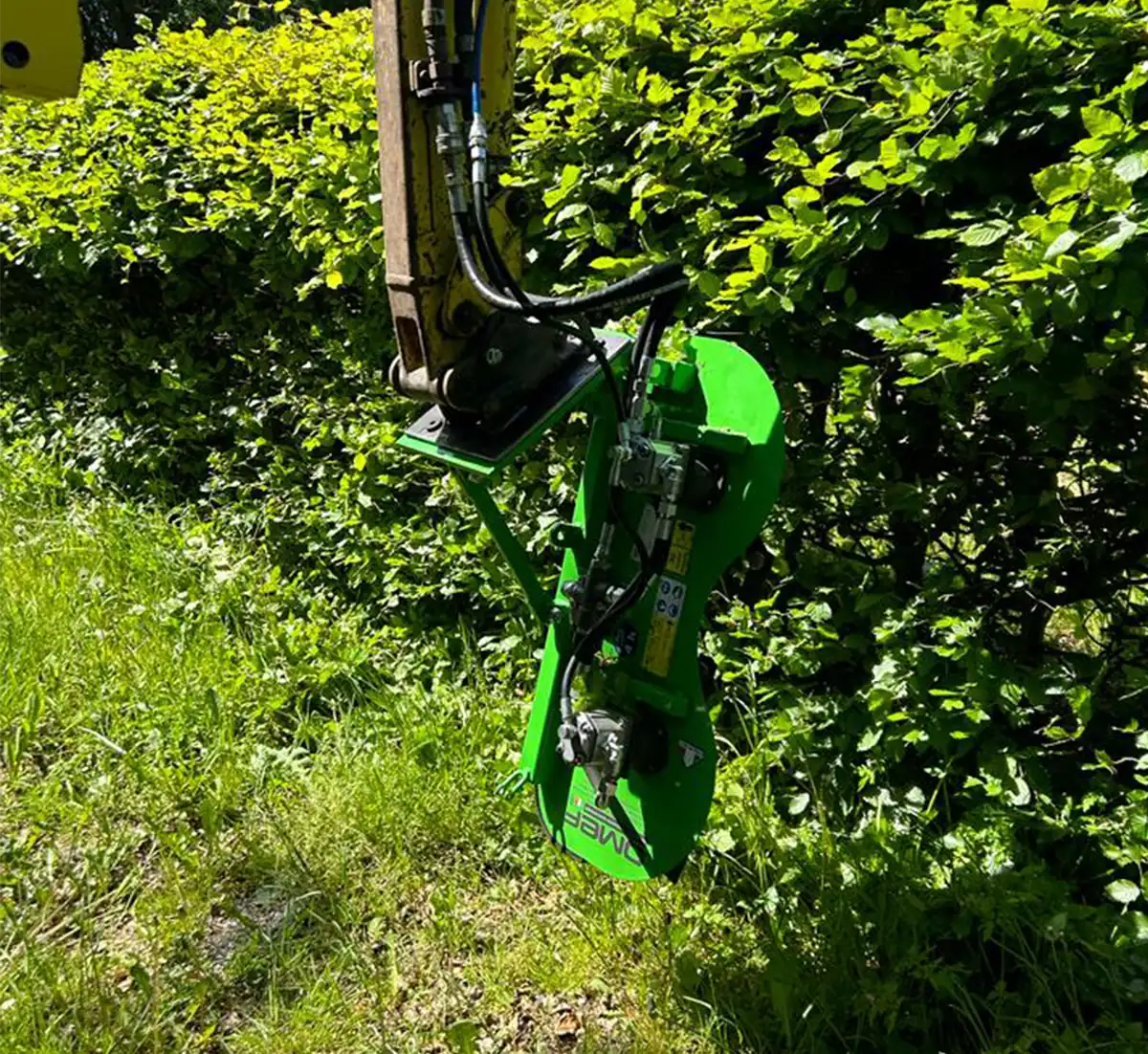
Mechanical Pruning
Trim, shape and cut without gripping
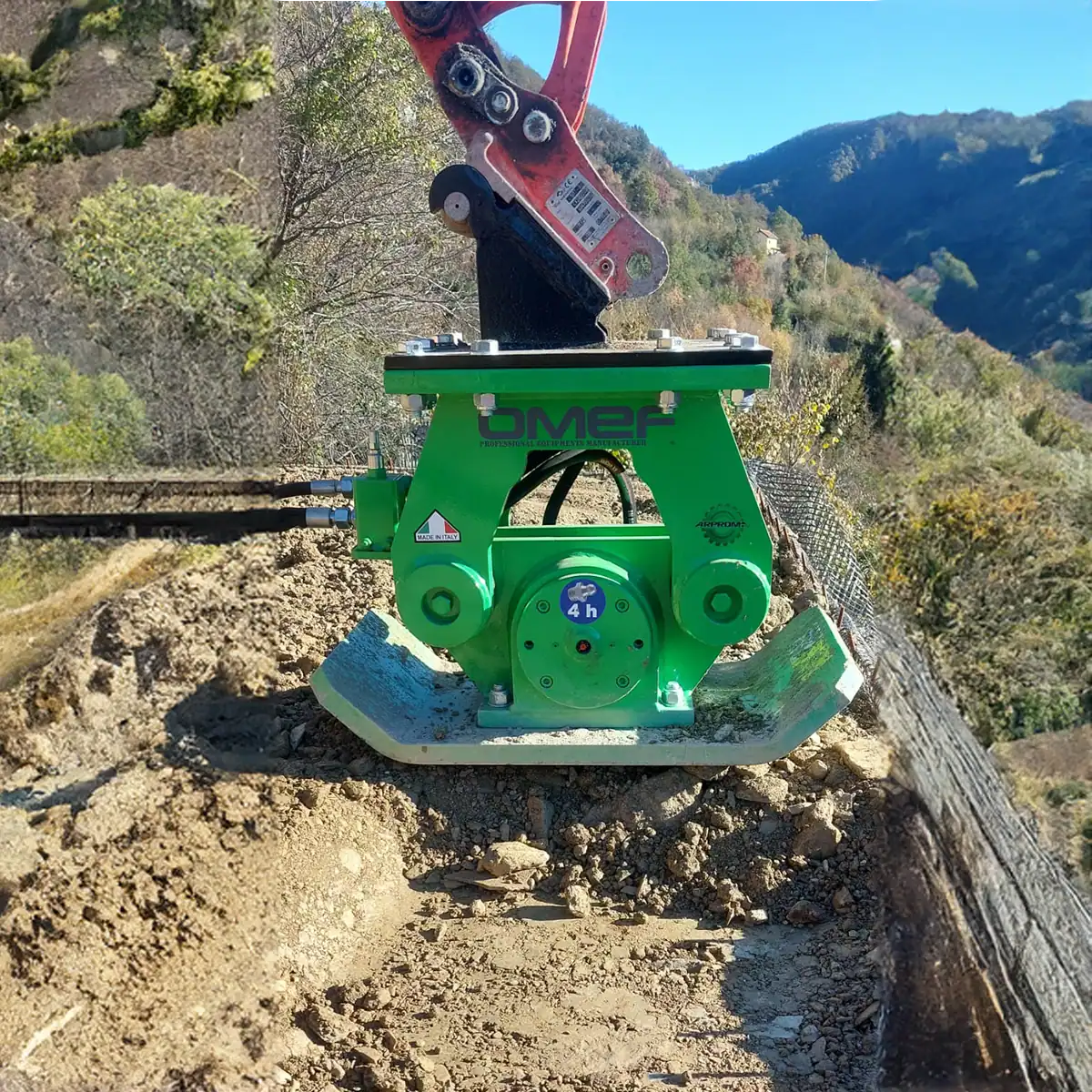
Tillage and Ground Preparation
Drill, compact and work soil after clearing
Selection logic
Four questions decide the purchase. Everything else is detail.
What carrier are you putting it on?
Operating weight, auxiliary flow in L/min, and available working pressure in bar. Most disappointing purchases trace back to a buyer who knew the first number and guessed the other two.
Does your hydraulic circuit support it?
Single-acting hammer line, hammer line plus case drain, double-acting, or a dual circuit. A 5 t excavator with a basic breaker circuit will not run a large grapple saw no matter how the invoice is worded.
What does the work actually look like?
Stem diameter, stem density per hectare, terrain, proximity to assets, and how much material you are allowed to leave behind. These decide the category more reliably than any sales conversation.
How many hours a year will it run?
Below about 200 hours, hire. Between 200 and 500, buy if the tool unlocks work you currently turn away. Above 500, ownership almost always wins and wear-part supply beats purchase price.
Market
Where the demand actually comes from
Australia has roughly 1.71 million hectares of commercial plantation. That estate is the visible forestry market. It is not where most attachment demand comes from.
Read the market section →Utility vegetation management
Distribution network operators run continuous, regulated, multi-year clearance programs. Trimming is generally carried out to meet AS 4373. Recurring revenue with a compliance floor, and it rewards mechanisation.
Bushfire fuel reduction
State hazard-reduction programs commit to treated-hectare targets rather than project budgets. The NSW Enhanced Bushfire Management Program was built around roughly 135,000 hectares a year. Area targets favour mulchers and shears over hand crews.
Development and civil clearing
Site preparation, road corridors, solar and wind projects, subdivision. Lumpy and competitive, and the reason most contractors buy their first forestry attachment.
Tools
Work the numbers before you call anyone
Nothing here needs an email address. Enter your own figures, and the result is a URL you can paste into a tender note or send to your accountant.
Will your machine run it?
Operating weight, auxiliary flow and the circuits you have fitted, against every published carrier range in the guide.
OpenT2Cost per stump
Attachment capital, teeth, carrier, operator and fuel, divided by stumps per hour. The only honest comparison against a crew.
OpenT3Cost per hectare
Mulching and clearing priced properly: productivity, wear, mobilisation, overhead and margin resolved into a tender rate.
OpenT4Compatibility matrix
Every category against every carrier class on one reference table, with the circuit each one needs.
OpenHead to head
Two names, one job, entirely different machines
Stump Grinder or Stump Cutter?
They solve opposite problems.
Tree Shear or Forestry Mulcher?
Shear if the timber has value or has to be placed somewhere specific.
Grapple Saw or Tree Shear?
Shear for volume felling in open ground where speed is the goal.
Grapple Saw or Forestry Grab?
If your work is feeding a chipper, building log decks and cleaning up after someone else has cut, buy the grab — it is the highest-utilisation attachment most contractors own.
Carrier match
Find your machine on the axis and read down
Carrier weight, tonnes
Published operating machine ranges, plotted on a log scale so the detail below ten tonnes stays readable. Find your machine on the axis and read down.
Ranges referenced in these guides
Compare the manufacturers →



Talk to a specialist
Bring three numbers.
Leave with a shortlist.
Operating weight, auxiliary flow in litres per minute, working pressure in bar. Machinery Specialist supplies forestry attachments across Australia from South Windsor, NSW.