The short answer
If your work is feeding a chipper, building log decks and cleaning up after someone else has cut, buy the grab — it is the highest-utilisation attachment most contractors own. Add the saw only when you are regularly cutting material that is still standing or still attached.
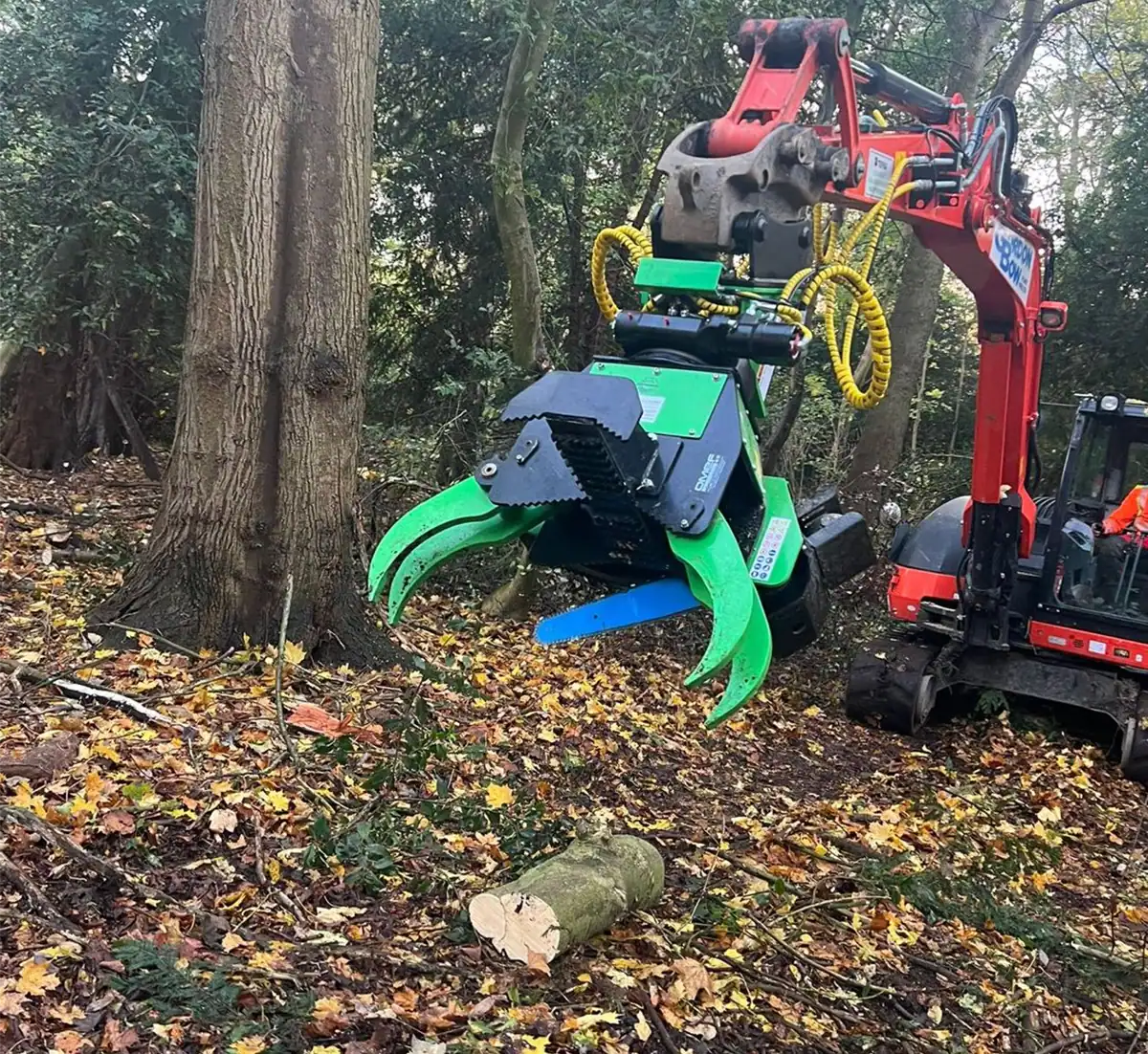
Grapple saw
Cuts and holds in one tool, from the ground
Choose it when
- You are removing standing or attached material yourself
- Sections must be cut and lowered in a controlled sequence
- You want a single machine to fell, section and stack
- The carrier already has, or can be fitted with, a dual circuit
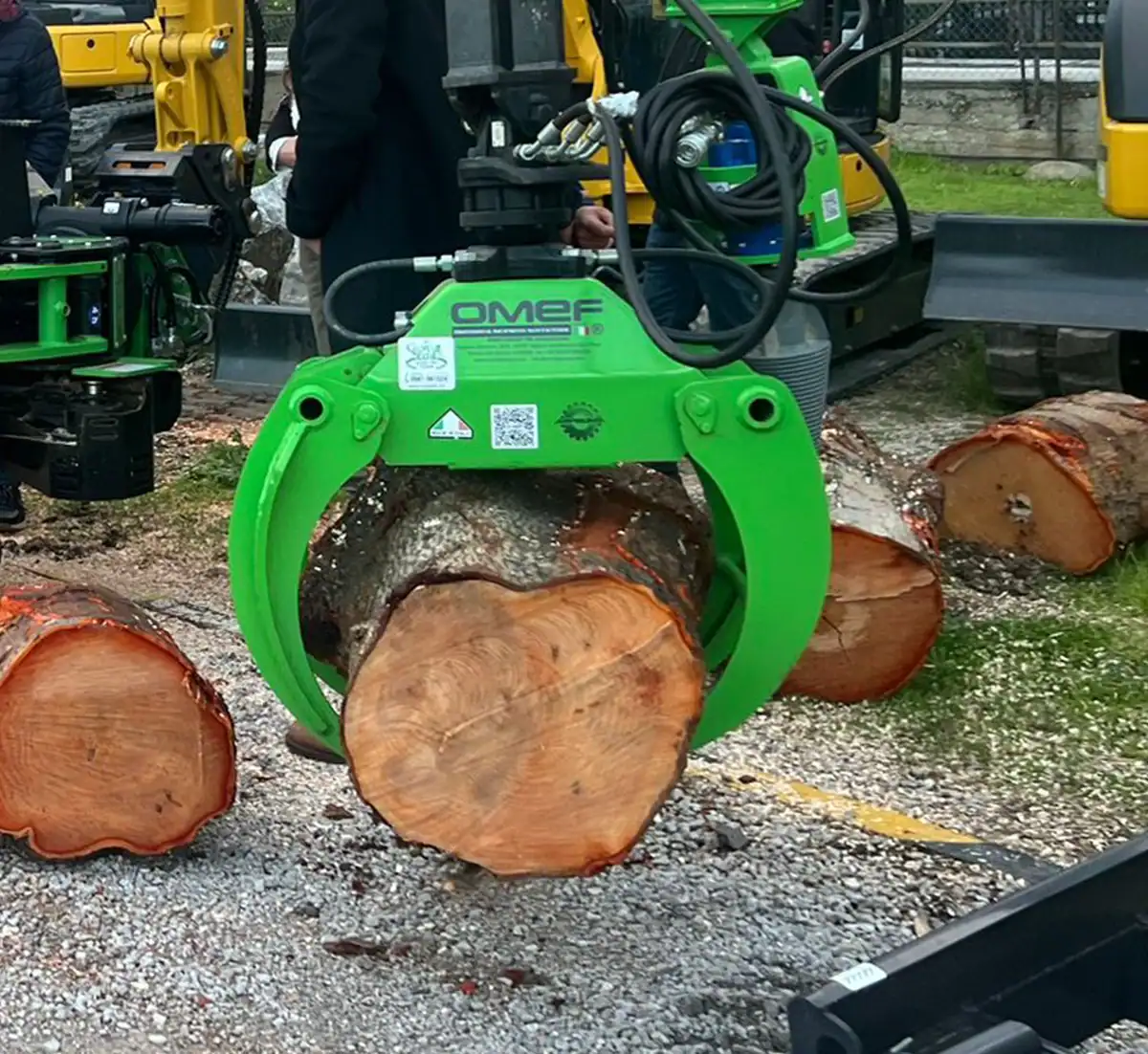
Log or forestry grab
Moves timber, brash and biomass — nothing else
Choose it when
- Someone else has already done the cutting
- The job is chipper feeding, log decks and site clean-up
- You want the highest running hours per dollar of any attachment
- Simplicity and uptime matter more than versatility
Side by side
| Criterion | Grapple saw | Log or forestry grab |
|---|---|---|
| Can it cut? | Yes | No — handling only |
| Circuit | Dual circuit, saw plus grapple and rotation | Double-acting plus rotation |
| Purchase cost | Higher — you are buying a saw unit too | Lower |
| Consumables | Chains and bars on top of normal wear | Tines and rotator service only |
| Typical utilisation | Job-specific | Very high — it is useful on almost every site |
| Retention on brash | Moderate — arms are shaped around the saw | Strong — more tines, better grip on irregular material |
| Carrier range | 3–30 t | 13–25 t typical |
| Downtime risk | More systems, more to go wrong | Fewer moving parts |
Shaded cell is the stronger side on that criterion
When the answer is both
Arborists scaling up usually buy the grab first because it works every day, then add the grapple saw once removals become a bigger share of the book than clean-ups.
Questions that follow
01Can I fit a saw to a grab I already own?
Not as a retrofit. The saw unit, its guarding and the second circuit are designed into the head, which is why grapple saws are a separate category rather than an option box.
02How many tines should a forestry grapple have?
More tines give better retention on irregular and bulky material. Five solid Hardox tines suit brash and biomass work, where four-tine grapples tend to spill material.
03Does a grab need a rotator?
For forestry work, effectively yes. Continuous 360° rotation is what lets an operator align to a log without repositioning the machine, and it is most of the productivity difference.